Unsprung Weight Explained | How Wheels & Tires Affect Performance
Learn what unsprung weight is, how wheels and tires affect handling, and how to choose a lighter performance setup. Contact Automotive Expressions today.
Unsprung Weight:Why Wheel and Tire Weight Matters to Vehicle Performance
Unsprung weight is the mass of the vehicle that is not primarily supported by the suspension springs. In simple terms, it includes the components that move with the wheels as they travel over bumps, dips, potholes, and uneven pavement.
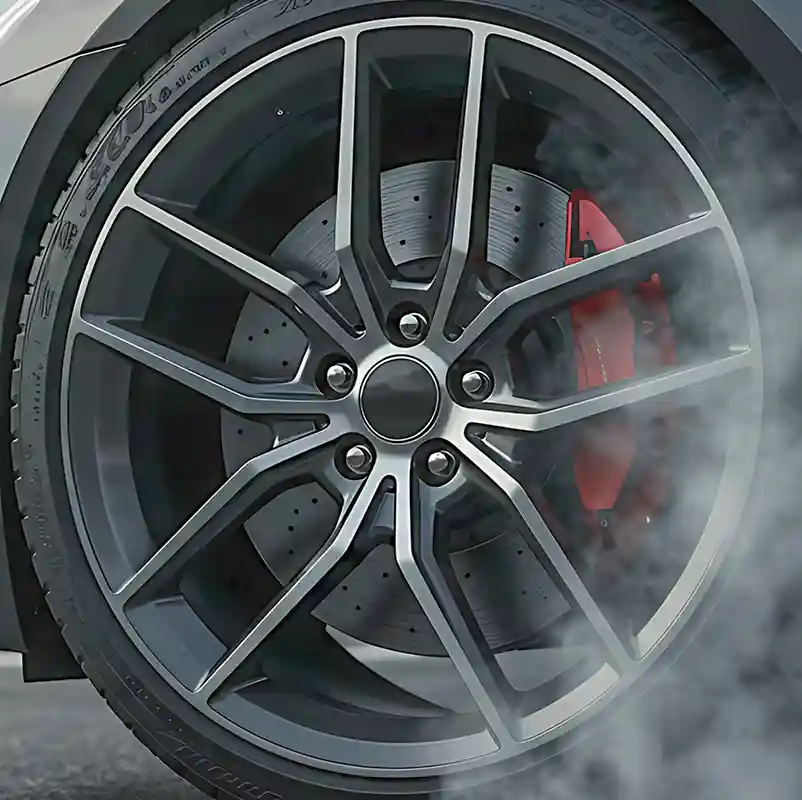
For most cars, trucks, SUVs, and performance vehicles, the wheel-and-tire assembly is a major part of unsprung weight. Brake rotors, calipers, hubs, wheel bearings, axles, and portions of suspension components also contribute. By comparison, the vehicle body, cabin, engine, drivetrain, and most of the chassis are considered sprung weight because the suspension supports them.
Unsprung weight matters because the suspension must control it. A lighter wheel-and-tire package can be easier for springs and dampers to manage, helping the tire follow changes in the road surface. That can influence ride quality, steering response, traction, handling feel, and braking behavior—particularly on uneven pavement or during performance driving.
At Automotive Expressions, we help drivers in Flowery Branch, GA, and throughout North Georgia compare custom wheels, tires, suspension upgrades, and complete fitment packages. When building a performance car, street truck, SUV, track vehicle, or custom daily driver, wheel weight is one important specification to consider alongside wheel strength, load rating, tire selection, offset, brake clearance, and intended use.
What Is Unsprung Weight?
Unsprung weight is the portion of a vehicle’s total mass located below the springs or otherwise moving with the wheel assemblies. It is exposed more directly to road impacts because it is not cushioned in the same way as the vehicle body.
Common unsprung-weight components include:
- Wheels
- Tires
- Brake rotors
- Brake calipers
- Wheel hubs and bearings
- Axles or portions of half-shafts
- Steering knuckles
- Portions of shocks, struts, springs, and suspension links
- Certain sections of control arms and related hardware
Not every suspension component falls entirely into one category. A control arm, for example, connects the chassis on one end and the wheel assembly on the other, so engineers may describe portions of it as “semi-sprung.” The most practical takeaway for vehicle owners is that wheels and tires are highly relevant because they are substantial, replaceable parts of the unsprung system.
Unsprung Weight vs. Sprung Weight
Weight Category |
Definition |
Common Components |
|
Sprung weight |
Mass supported by the suspension springs |
Vehicle body, interior, engine, transmission, most chassis components |
|
Unsprung weight |
Mass that moves with the wheels and is not primarily supported by the springs |
Wheels, tires, brakes, hubs, axles, parts of the suspension |
|
Rotational mass |
Mass that spins while the vehicle is moving |
Wheels, tires, brake rotors, hubs, axles and driveline components |
Unsprung weight and rotational mass overlap, but they are not identical. A wheel and tire are both unsprung and rotational because they move up and down with the suspension and spin while driving. A brake caliper is unsprung, but it does not rotate. A driveshaft rotates, but depending on vehicle design, it is not entirely unsprung.
Why Lower Unsprung Weight Can Help
When a tire encounters a pothole, rough pavement, expansion joint, or bump, the wheel assembly needs to move quickly to follow the road surface. The spring and damper must control that movement while helping the tire return to the pavement and maintain traction.
A heavier wheel-and-tire assembly has more inertia. It takes more force to accelerate upward over an impact and more damping control to settle the assembly afterward. When the system cannot react quickly enough, the tire may spend less time maintaining ideal contact with the surface.
Reducing unsprung weight can help the suspension respond more effectively to road irregularities. This may contribute to:
- Improved tire contact on uneven pavement
- More controlled suspension movement
- Sharper steering response
- Better handling consistency
- Reduced bouncing or harshness over bumps
- More predictable braking behavior on imperfect roads
- A more connected, responsive driving feel
Vehicle-dynamics explanations consistently identify tire contact as the key reason unsprung weight matters. Lighter wheel assemblies give the springs and dampers less mass to control, which can help the tire follow the road more effectively and support grip.
The benefit is not always dramatic in everyday driving. A small weight reduction may be subtle on a heavy truck with soft factory suspension, while the same change could be more noticeable on a lighter sports car with performance tires and firmer damping. Vehicle weight, suspension design, road conditions, tire construction, and the magnitude of the weight change all matter.
Why Wheels and Tires Have a Big Effect
The wheel-and-tire assembly is a major unsprung-weight component and one of the easiest areas to modify. When choosing aftermarket wheels, drivers often focus on diameter, color, spoke design, and offset. Those factors matter, but total wheel-and-tire assembly weight deserves attention as well.
A wheel that is lighter than the factory wheel may help reduce unsprung weight. But that benefit can be reduced—or erased—if the new tire is significantly heavier.
For example, a lightweight 18-inch forged wheel paired with a moderate-weight performance tire may create a lighter overall assembly than a 20-inch cast wheel paired with a large, heavy all-terrain tire. Even if both combinations fit the same vehicle, they will likely affect ride, steering response, acceleration feel, and suspension behavior differently.
When comparing wheel options, ask for:
- Wheel weight in the exact diameter and width.
- Tire weight in the exact selected size and load range.
- Combined wheel-and-tire assembly weight.
- Wheel construction, such as cast, flow-formed, or forged.
- Wheel load rating.
- Tire load index and speed rating.
- Brake-caliper clearance.
- Correct wheel offset and backspacing.
- Vehicle-specific clearance at steering lock and suspension compression.
A light wheel that does not fit correctly or cannot support the required load is not the right wheel. Proper fitment, structural suitability, and tire compatibility come before weight savings.
Unsprung Weight and Rotational Mass
Unsprung weight affects suspension movement. Rotational mass affects the energy required to accelerate and slow spinning components.
Wheels and tires matter in both ways. They move with the suspension and rotate with vehicle speed. This “double role” explains why a heavy wheel-and-tire package can change how a vehicle feels even if it does not add much weight compared with the total vehicle mass.
The location of weight also matters. Mass located farther from the center of the wheel has a greater effect on rotational inertia than the same amount of mass located near the hub. In practical terms, large-diameter wheels and oversized tires can place more mass farther outward, depending on their design and construction.
That does not mean large wheels are always a poor performance choice. A well-engineered larger wheel can be lighter than a smaller, heavier design. The best comparison is between complete assemblies—not diameter alone.
Consider these two general examples:
Setup |
Potential Result |
|
Lightweight wheel with a properly matched tire |
Can reduce unsprung and rotational mass while preserving fitment and tire capability |
|
Oversized wheel with a heavy tire |
May add unsprung and rotational mass, which can affect ride response, acceleration feel, and braking demand |
|
Lightweight forged wheel paired with an extremely heavy off-road tire |
May still create a heavy complete assembly despite low wheel weight |
|
Small wheel with an overly tall or heavy tire |
May provide sidewall cushioning but still add significant mass and affect steering response |
A performance-focused decision should consider total weight, tire dimensions, wheel construction, ride goals, traction needs, and vehicle purpose.
How Much Does Unsprung Weight Matter?
Unsprung weight matters, but it should be viewed in context. It is not a shortcut that transforms every vehicle into a race car, and there is no universal formula that says removing one pound from a wheel equals a specific amount of weight removed from the vehicle body.
The most noticeable benefits tend to occur when:
- The weight reduction is meaningful at each corner.
- The vehicle is relatively lightweight.
- The suspension is capable of taking advantage of the change.
- The vehicle is driven on uneven roads, at higher speeds, or in performance situations.
- The new wheel-and-tire package preserves or improves tire fitment and traction.
- The driver is sensitive to steering, ride, and handling differences.
An average daily driver may notice a lighter wheel package as improved steering response, less harshness over certain bumps, or a more agile feel. A track driver may focus on more consistent tire contact and suspension response. A truck owner may prioritize different goals, such as tire sidewall, load ratings, towing stability, and durability over minimal wheel weight.
One engineering-oriented analysis notes that reducing unsprung mass can improve damping control and tire contact, but also cautions that the effect should be considered relative to the vehicle’s overall sprung-to-unsprung weight relationship.
Unsprung Weight for Performance Cars
For sports cars, sport sedans, coupes, and track-oriented vehicles, a lighter wheel-and-tire package can be a meaningful part of a balanced performance plan.
Potential benefits may include:
- Faster-feeling steering transitions
- More predictable cornering on imperfect pavement
- Better suspension compliance over curbing and bumps
- Reduced energy required to accelerate the wheel assemblies
- Reduced braking demand from rotating mass
- A more responsive driving character
Forged wheels are often selected for performance applications because their manufacturing process can allow favorable strength-to-weight characteristics. Flow-formed wheels can also offer a middle-ground option between basic cast wheels and fully forged designs. However, construction type alone does not determine the best wheel. Compare the exact wheel’s weight, size, width, load rating, finish, brake clearance, and offset.
For a road-course or autocross build, wheel size should also support the tire sizes you plan to run and clear the brake package. A smaller, lighter wheel is not useful if it will not clear the brakes or does not provide access to appropriate tire options.
Unsprung Weight for Trucks and SUVs
Truck and SUV owners often have different priorities from track-car owners. Larger all-terrain and mud-terrain tires, reinforced light-truck construction, higher load ratings, and off-road durability can add substantial weight to each corner of the vehicle.
That added weight may influence:
- Acceleration and braking feel
- Steering effort
- Ride comfort
- Suspension control over rough roads
- Fuel economy
- Tire wear
- Driveline and brake demands
However, reducing weight should never take priority over appropriate load capacity or durability. A truck used for towing, hauling, off-roading, or carrying heavy accessories needs wheels and tires rated for the actual work it performs.
For a daily-driven truck, a thoughtfully selected all-terrain tire and a properly rated, reasonably lightweight wheel can create a better balance than simply choosing the largest available wheel and heaviest tire. For an off-road build, tire sidewall, tread design, puncture resistance, load range, and actual trail conditions may matter more than minimizing weight.
How to Choose Lighter Wheels Responsibly
If reducing unsprung weight is one of your goals, follow a complete fitment process rather than choosing by advertised weight alone.
- Define the vehicle’s purpose. Decide whether you prioritize commuting, performance driving, road-course use, drag racing, towing, hauling, or off-roading.
- Compare complete wheel-and-tire assemblies. Request weights for both the wheel and the exact tire model and size.
- Verify strength and load rating. Ensure the wheel is designed and rated for the vehicle, passengers, cargo, and intended use.
- Confirm proper fitment. Check bolt pattern, center bore, wheel width, offset, backspacing, brake clearance, and full-range tire clearance.
- Choose the correct tire. Match the tire’s approved wheel-width range, load index, speed rating, tread type, and operating conditions to the vehicle.
- Maintain the suspension system. Worn shocks, struts, bushings, ball joints, or alignment problems can limit the benefit of lighter wheels.
- Inspect after installation. Confirm lug-hardware compatibility, use the proper torque procedure, check tire pressure, and recheck for rubbing or vibration after driving.
Get Performance Wheel Guidance in North Georgia
Unsprung weight is a meaningful part of vehicle dynamics, especially because wheels and tires are both unsprung and rotating components. A lighter, properly engineered wheel-and-tire package can help the suspension respond to road changes, support tire contact, and create a more responsive driving experience. But the right solution depends on the whole vehicle—not weight alone.
Automotive Expressions helps drivers in Flowery Branch, Gainesville, Buford, Cumming, Suwanee, Sugar Hill, Alpharetta, Johns Creek, Lawrenceville, and surrounding North Georgia communities compare custom wheels, performance tires, suspension upgrades, and vehicle-specific fitment options.
Contact Automotive Expressions to discuss lightweight wheels, forged and flow-formed wheel options, tire sizing, brake clearance, wheel offset, suspension compatibility, and professional installation for your performance car, truck, SUV, or Jeep.