Rotational Mass Explained | How Wheel and Tire Weight Affects Performance
Learn how rotational mass affects acceleration, braking, and vehicle response. Contact Automotive Expressions for performance wheel fitment guidance today.
Rotational Mass:How Spinning Weight Affects Acceleration, Braking & Vehicle Performance
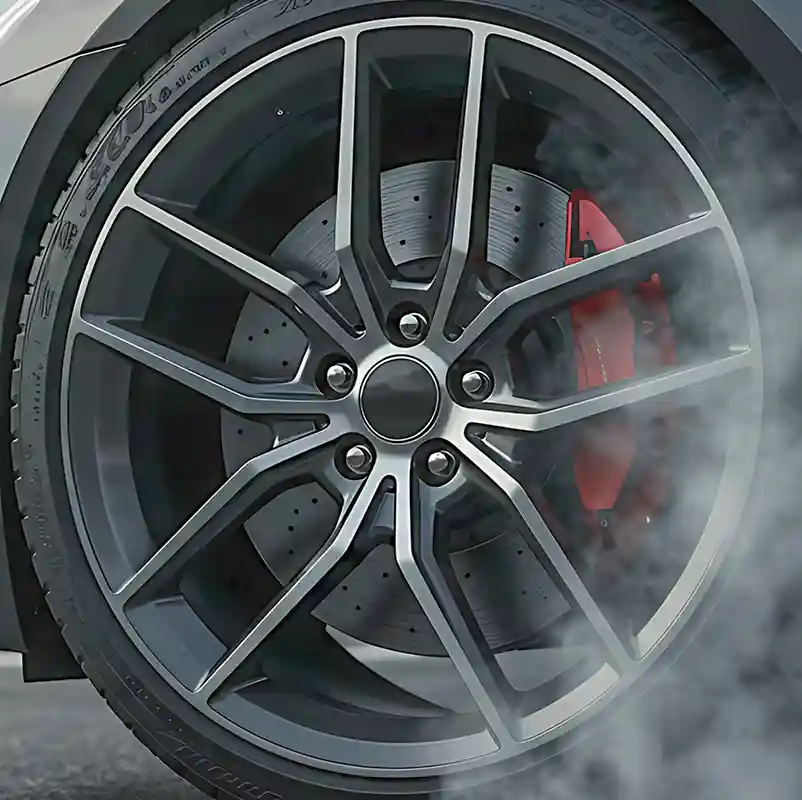
Rotational mass is the weight of components that spin while your vehicle moves. In a car, truck, SUV, or Jeep, those components include the wheels, tires, brake rotors, hubs, axles, driveshaft, and portions of the drivetrain.
For performance upgrades, the wheel-and-tire assembly is often the most practical place to evaluate rotational mass because it is both replaceable and highly influential. Your engine must supply energy not only to move the vehicle forward but also to spin the wheels, tires, brake components, and driveline parts. When you brake, the braking system must slow the vehicle’s forward motion and reduce the energy stored in those rotating components.
This is why a lighter, properly fitted wheel-and-tire package can make a vehicle feel more responsive. It may reduce the energy required to accelerate the rotating assemblies and the braking effort required to slow them. But the correct upgrade is never simply “the lightest wheel available.” It must also meet your vehicle’s fitment, load, brake-clearance, tire, and driving-use requirements.
At Automotive Expressions, we help drivers in Flowery Branch, GA, and throughout North Georgia compare custom wheels, performance tires, suspension upgrades, and complete wheel-and-tire packages. Whether you are building a sports car, muscle car, performance SUV, track vehicle, drag-focused build, or responsive daily driver, rotational mass is one factor worth considering.
What Is Rotational Mass?
Rotational mass refers to any mass that spins around an axis. In vehicle performance discussions, people often use the term interchangeably with rotational inertia. More precisely, rotational inertia—also called moment of inertia—is the resistance a spinning object has to changes in its rotation speed.
Mass alone matters, but where that mass is located matters too.
A simple physics relationship for a point mass is:
I=mr2I = mr^2
Where:
- II is moment of inertia.
- mm is mass.
- rr is the distance from the axis of rotation.
This relationship shows why mass farther away from the axis has a larger effect on rotational inertia. In a wheel-and-tire assembly, weight near the outer lip of the wheel and outer tire diameter generally matters more to rotational inertia than the same amount of weight near the hub.
Rotational-inertia teaching materials explain that an object’s resistance to changes in rotation depends on both its mass and its mass distribution relative to the rotation axis.
Common Rotating Vehicle Components
Rotational mass can include:
- Wheels
- Tires
- Brake rotors
- Wheel hubs
- Axles and axle shafts
- Driveshafts
- Differential components
- Transmission gears and shafts
- Engine crankshaft, flywheel, and clutch or torque-converter components
- Electric-motor rotors in electric or hybrid vehicles
Not every rotating component has the same practical influence on the driving experience. Wheels and tires are especially important because they are near the ground, rotate continuously with vehicle speed, often make up a meaningful amount of mass, and are frequently changed during a performance build.
Why Rotational Mass Matters
When you press the accelerator, the powertrain must overcome two forms of inertia:
- Translational inertia—the resistance of the whole vehicle to moving forward.
- Rotational inertia—the resistance of spinning parts to increasing their rotational speed.
When you apply the brakes, the braking system must slow the vehicle’s forward movement and reduce the spinning speed of the wheels, tires, brake rotors, and other rotating components.
Vehicle-engineering research commonly treats rotating inertias as an “equivalent inertial mass” when analyzing acceleration and deceleration. In one Virginia Tech analysis, rotating components—including wheel-and-tire assemblies—contributed to a vehicle’s effective mass during acceleration and deceleration modeling.
In practical terms, lower rotational inertia can contribute to:
- More responsive acceleration feel.
- Reduced energy required to spin the wheel-and-tire assemblies.
- Quicker changes in vehicle speed for a given amount of available power.
- Reduced demand on brakes when decelerating spinning components.
- More immediate throttle response, especially in lower gears.
- A more agile overall driving character.
The difference can be noticeable in a lightweight sports car, track build, high-horsepower street car, or vehicle with a large change in wheel-and-tire weight. It may be subtler in a heavier truck, SUV, or daily driver where the complete vehicle mass is much greater and priorities such as load capacity, ride quality, and tire durability are more important.
Rotational Mass vs. Unsprung Weight
Rotational mass and unsprung weight are related, but they describe different vehicle-dynamics effects.
Term |
What It Describes |
Why It Matters |
| Rotational mass | Mass that spins while driving | Affects energy required for acceleration and deceleration |
| Rotational inertia | Resistance to changing rotational speed | Depends on mass and how far that mass sits from the rotation axis |
| Unsprung weight | Mass not primarily supported by the suspension springs | Influences how suspension manages wheel movement over road irregularities |
| Wheel-and-tire assembly | Both rotating and unsprung mass | Can affect acceleration, braking, steering response, ride, and suspension behavior |
A wheel and tire have a dual effect. They are part of the unsprung system because they move up and down over bumps, and they are rotating components because they spin with vehicle speed.
A brake caliper is generally unsprung but does not rotate. A driveshaft rotates, but it is not part of the wheel assembly and is not generally treated as fully unsprung. Understanding the distinction helps avoid oversimplified claims about wheel weight.
Why Wheel and Tire Weight Matter Most
The wheel-and-tire assembly often represents a meaningful portion of the vehicle’s rotating mass. It is also an area where aftermarket choices can vary widely.
For example, a lightweight forged wheel may weigh substantially less than a large, heavy cast wheel of similar appearance. But the tire can change the equation just as much. A lightweight wheel paired with a heavy light-truck tire, mud-terrain tire, reinforced tire, or large-diameter tire can still result in a heavy complete assembly.
That is why you should compare the combined weight of the exact wheel and tire combination—not only wheel weight.
Ask for these specifications when comparing setups:
- Wheel weight in the exact diameter and width.
- Tire weight in the exact size and load range.
- Total wheel-and-tire assembly weight.
- Wheel diameter, width, offset, and backspacing.
- Tire overall diameter and actual section width.
- Wheel load rating.
- Tire load index, load range, and speed rating.
- Brake-caliper clearance.
- Tire clearance during turning and suspension movement.
A properly engineered performance wheel may be lighter, but it still must be suitable for the vehicle. The correct bolt pattern, center bore, lug-seat type, load rating, brake clearance, and offset are non-negotiable.
Bigger Wheels and Rotational Inertia
Bigger wheels can create a bold visual upgrade, provide brake-package clearance, and support certain tire sizes. However, a larger wheel is not automatically better for performance.
Because rotational inertia increases with the square of distance from the axis, added mass near the outer edge of the wheel-and-tire assembly has a larger effect than the same added mass closer to the hub.teksguide+1
A larger-diameter wheel usually requires a lower-profile tire if you want to retain a similar overall tire diameter. This can create sharper steering response and reduce sidewall flex, but it can also lead to:
- Added wheel-and-tire weight.
- More weight concentrated farther from the hub.
- A firmer ride.
- More exposure to pothole or curb damage.
- Less sidewall cushioning.
- Different tire availability.
- Higher replacement cost.
- Potential changes in acceleration and braking feel.
That does not mean smaller wheels always outperform larger wheels. A well-designed 19-inch forged wheel can weigh less than a heavy 17-inch cast wheel. A properly selected 20-inch performance wheel-and-tire package can be appropriate for a performance SUV or street truck. Compare actual assembly weight and dimensions rather than relying only on wheel diameter.
Tire Size Also Changes Rotational Mass
Tires often contribute more weight than drivers expect. Moving to a larger tire diameter, wider tire, more aggressive tread design, or reinforced light-truck construction can add significant weight at each corner.
Examples of changes that can increase rotational mass include:
- Installing oversized all-terrain or mud-terrain tires.
- Moving to a heavier load-range tire for a truck.
- Choosing a wider tire with more material and a larger contact patch.
- Increasing overall tire diameter.
- Switching to a tire with deeper tread blocks or reinforced sidewalls.
- Selecting a larger wheel with a tire that adds overall assembly weight.
For truck and SUV owners, larger tires may be a worthwhile tradeoff for ground clearance, load capability, puncture resistance, off-road traction, and visual impact. But they can affect acceleration, braking feel, steering effort, fuel economy, suspension response, and gearing.
For performance-car owners, a larger tire is not automatically more effective. Tread compound, operating temperature, tire pressure, wheel width, alignment, vehicle power, and actual clearance all affect grip and performance.
Rotational Mass and Braking
Rotational mass contributes energy that must be managed during deceleration. Brake rotors, pads, calipers, tires, and the vehicle’s braking system work together to slow both the vehicle’s linear motion and rotating components.
A lower-inertia wheel-and-tire assembly may reduce some of the energy required to slow the rotating parts. However, braking performance depends on many additional variables, including:
- Tire grip and tire temperature.
- Road surface and weather.
- Brake pad and rotor condition.
- Brake-system design and cooling.
- Vehicle weight and weight transfer.
- Suspension condition.
- Brake bias and electronic stability systems.
- Wheel diameter and brake-caliper clearance.
Do not assume that lighter wheels alone will produce shorter stopping distances. On a street vehicle, tire traction and brake condition are often more influential. Braking analysis also differs by axle because driven wheels may involve added drivetrain inertia.courses.grainger.illinois+1
The best approach is to treat lighter wheels as one supporting part of a broader performance and maintenance plan—not a replacement for proper brakes, tires, alignment, suspension health, or safe driving.
How Rotational Mass Affects Different Vehicles
Sports Cars and Performance Sedans
For lighter vehicles with responsive suspension and performance tires, a reduction in wheel-and-tire assembly weight may be noticeable through more immediate acceleration feel, improved steering response, and more controlled behavior over rough pavement.
A performance build may prioritize forged or flow-formed wheels, appropriate tire width, brake clearance, and a diameter that provides a good balance of tire availability, weight, and sidewall support.
Track and Autocross Vehicles
Track drivers often value low wheel weight, reliable brake clearance, tire selection, proper offset, and repeatable handling. The objective is not always to use the biggest wheel—it is to use a wheel that supports the correct tire size and braking system while keeping the complete assembly appropriately light and strong.
A square setup with matching wheel and tire sizes at all four corners can allow tire rotation where appropriate and help create predictable handling. The ideal layout still depends on the vehicle’s drivetrain, weight distribution, suspension design, and competition rules.
Drag-Focused Builds
Drag racing vehicles often prioritize straight-line acceleration and rear-tire traction. A lighter wheel-and-tire setup can reduce the energy needed to accelerate the rotating assemblies, but the tire must also provide enough traction and sidewall behavior for the vehicle’s power and launch characteristics.
Smaller-diameter rear wheels are common in some drag applications because they can accommodate taller-sidewall tires and may reduce weight or rotational inertia. Brake clearance, tire construction, track rules, and safe street-use needs must all be verified.
Trucks, SUVs, and Jeeps
Truck and SUV upgrades can add considerable rotational mass, particularly when drivers install larger wheels, oversized tires, lift kits, and aggressive all-terrain or mud-terrain tire designs.
For these vehicles, the goal is usually balance. A wheel-and-tire package should have sufficient load rating, durability, tire sidewall, traction, clearance, and towing capability. Reducing weight can be beneficial, but it should not compromise the truck’s actual job.
Avoid “Equivalent Weight” Myths
You may see online claims that removing one pound of wheel weight is equal to removing several pounds from the vehicle body. There is no single conversion that applies to every vehicle, wheel, tire, gear ratio, speed, and driving situation.
The real effect depends on:
- Total vehicle weight.
- Wheel-and-tire assembly mass.
- How the mass is distributed.
- Wheel and tire radius.
- Vehicle gearing.
- Engine torque and power delivery.
- Road speed.
- Brake-system capability.
- Tire traction.
- Suspension setup.
The physics is real: rotating parts require energy to accelerate, and mass farther from the rotation axis increases rotational inertia. But responsible performance planning uses actual weights, specifications, and fitment data instead of relying on a universal “one pound equals X pounds” claim.
Choosing a Lower-Inertia Wheel Package
A lower-inertia wheel-and-tire package should be chosen carefully.
- Define your goal. Identify whether your build prioritizes daily driving, handling, autocross, track use, drag racing, towing, hauling, or off-road travel.
- Compare whole assemblies. Add the exact wheel weight and tire weight for every option you are considering.
- Consider outside diameter. A larger overall tire diameter can alter effective gearing, speedometer accuracy, clearance, and rotational inertia.
- Verify wheel construction and ratings. Confirm wheel load rating, manufacturer specifications, and suitability for the vehicle.
- Confirm complete fitment. Verify bolt pattern, center bore, wheel width, offset, backspacing, brake clearance, and tire clearance at full lock and suspension compression.
- Choose tires for real conditions. Match tread type, load index, speed rating, temperature range, and wet-weather needs to how and where you drive.
- Protect the investment. Use compatible lug hardware, follow torque specifications, maintain correct tire pressure, balance the assemblies, and schedule alignment checks after suspension or tire-size changes.
Get Performance Wheel Guidance in North Georgia
Rotational mass is one reason the right wheel-and-tire package can make a vehicle feel more responsive. A lighter, properly engineered assembly may reduce rotational inertia and support acceleration, braking response, and overall driving feel. But the best performance setup is always the one that balances weight with strength, fitment, tire choice, brake clearance, safety, and intended use.
Automotive Expressions helps drivers in Flowery Branch, Gainesville, Buford, Suwanee, Sugar Hill, Cumming, Duluth, Alpharetta, Johns Creek, Lawrenceville, and surrounding North Georgia communities choose performance wheels, tires, suspension upgrades, and complete custom fitment packages.
Contact Automotive Expressions to discuss lightweight wheels, forged or flow-formed wheel options, performance tires, brake clearance, wheel offset, tire sizing, suspension compatibility, and professional installation for your car, truck, SUV, or Jeep.