How to Choose Tires for Off-Road Driving
Learn how to choose the best off-road tires based on terrain, tread patterns, durability, traction, and tire size. Find the right tires for your adventure!
How to Choose Tires forOff-Road Driving
Off-road driving puts unique demands on your vehicle and tires. Whether you’re navigating rocky trails, muddy paths, sand, or gravel, the right tires can make a significant difference in traction, durability, and performance.
Choosing off-road tires requires more than selecting an aggressive-looking tread pattern. You also need to consider the type of terrain, tire construction, sidewall strength, size, load rating, and how often you drive on paved roads.
At Automotive Expressions, we help drivers explore wheel and tire options based on their vehicles, driving habits, and performance goals.
Consider the Type of Terrain
The best off-road tire depends heavily on where you plan to drive. Different environments require different levels of traction and tire performance.
Common off-road environments include:
- Mud
- Sand
- Rocks
- Gravel
- Dirt trails
- Snow
- Mixed terrain
Think about the conditions you encounter most often. A tire designed for deep mud may not provide the same performance on pavement or sand, while an all-terrain tire may offer a better balance for drivers who regularly switch between highways and trails.
Choose the Right Tire Type
Off-road tires are available in several categories designed for different driving conditions.
- All-Terrain Tires: All-terrain tires are a popular choice for drivers who want versatility. They provide a balance between off-road traction and on-road performance, making them a practical option for trucks and SUVs that spend time on both pavement and trails.
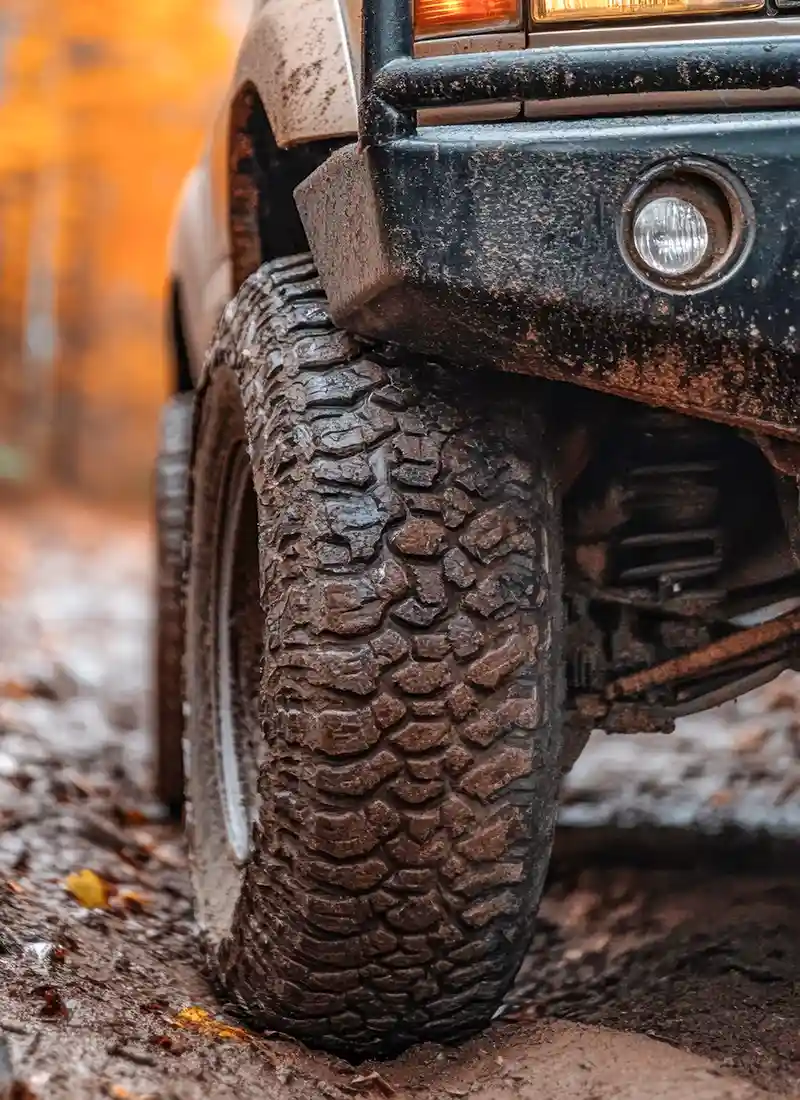
- Mud-Terrain Tires: Mud-terrain tires feature aggressive tread patterns designed to provide traction in mud and loose terrain. Their large tread blocks and open spaces can help clear mud as the tire rotates. The tradeoff may include increased road noise, a firmer ride, and different handling characteristics on pavement.
- Rock-Crawling Tires: Drivers who regularly navigate rugged terrain may benefit from tires designed for rock crawling. These tires typically emphasize traction, durability, and sidewall protection.
Look at the Tread Pattern
The tread pattern is one of the most important features of an off-road tire.
Aggressive tread designs can help provide traction on loose surfaces. Larger tread blocks and wider gaps may help tires grip uneven terrain and clear mud or debris.
However, aggressive tread patterns can produce more road noise and may wear faster during frequent highway driving.
If you spend most of your time on pavement, an extremely aggressive tread may not be the best choice.
Consider Sidewall Strength
Off-road trails can expose your tires to sharp rocks, roots, and other obstacles. A strong tire sidewall can help provide additional protection against damage.
Depending on your vehicle and driving conditions, consider tires with reinforced sidewalls or construction designed for demanding off-road use.
Sidewall strength is particularly important for drivers who regularly travel over rocky or rugged terrain.
Choose the Right Tire Size
Larger tires are popular among off-road enthusiasts because they can increase ground clearance and help vehicles navigate obstacles.
However, bigger isn’t always better.
Installing larger tires may affect:
- Vehicle clearance
- Steering
- Suspension components
- Speedometer accuracy
- Acceleration
- Braking
- Fuel economy
Some vehicles may require a lift kit, leveling kit, or other modifications to accommodate larger tires.
Before upgrading, make sure the tire size is compatible with your vehicle and wheel setup.
Consider Tire Pressure
Tire pressure can significantly affect off-road performance.
Lowering tire pressure can increase the tire’s contact patch and allow it to conform more closely to uneven surfaces. This may improve traction in certain conditions.
However, driving at low pressure requires caution. It can increase the risk of tire damage, particularly at higher speeds or on sharp rocks.
If you adjust tire pressure for off-road driving, follow the tire manufacturer’s recommendations and reinflate the tires appropriately before returning to normal highway driving.
Think About Load Rating and Construction
Your tires need to support the weight of your vehicle, passengers, cargo, and equipment.
This is particularly important for trucks and SUVs used for off-road adventures, camping, or overlanding.
Consider the tire’s:
- Load rating
- Load range
- Construction
- Sidewall strength
- Intended application
Choose a tire that meets your vehicle manufacturer’s specifications and is appropriate for how you use your vehicle.
Don’t Forget About On-Road Capability
Many off-road vehicles spend significant time on pavement. If you drive your truck or SUV to and from trails, your tires need adequate road capability, too.
Consider how the tire handles:
- Highway speeds
- Wet pavement
- Braking
- Cornering
- Road noise
- Ride comfort
An all-terrain tire may be a better choice for drivers who split their time between pavement and trails, while a specialized mud-terrain tire may be better suited to those who prioritize serious off-road performance.
Consider Your Vehicle and Driving Style
The ideal off-road tire depends on more than terrain. Your vehicle and driving style also matter.
A heavy-duty truck used for rock crawling may require a different tire than a crossover SUV driven on occasional gravel roads.
Think about:
- Vehicle weight
- Four-wheel-drive or all-wheel-drive system
- Typical terrain
- Driving frequency
- Cargo and towing needs
- Highway mileage
- Desired ride comfort
Choosing a tire based on your actual needs can help you avoid paying for capabilities you rarely use.
Check Your Wheels and Fitment
When upgrading to off-road tires, make sure the complete wheel and tire combination is properly matched.
Consider:
- Wheel diameter
- Wheel width
- Offset
- Bolt pattern
- Brake clearance
- Tire width
- Overall diameter
- Vehicle clearance
A tire may fit the wheel but still rub against the fender, suspension, or steering components.
A professional fitment evaluation can help identify potential issues before you purchase new tires.
Get the Right Off-Road Tires for Your Vehicle
Choosing tires for off-road driving involves balancing traction, durability, comfort, and on-road performance. The best tire depends on where you drive, how often you go off-road, and what you expect from your vehicle.
At Automotive Expressions, we can help you explore tire and wheel options based on your vehicle and driving goals. Whether you need all-terrain tires for weekend adventures, mud-terrain tires for challenging trails, or a custom wheel and tire setup, our team can help you find an option that fits your needs.
Contact Automotive Expressions to learn more about choosing the right off-road tires for your truck, SUV, or adventure vehicle.
Frequently Asked Questions About Off-Road Tires
What type of tire is best for off-road driving?
The best tire depends on your terrain and driving habits. All-terrain tires offer versatility, while mud-terrain and specialized off-road tires are designed for more demanding conditions.
Are larger tires better for off-roading?
Larger tires can provide additional ground clearance and help navigate obstacles, but they may require vehicle modifications and can affect handling, fuel economy, and other performance characteristics.
Should I lower my tire pressure when driving off-road?
Lowering tire pressure can improve traction in some conditions by increasing the tire’s contact with the ground. However, it should be done carefully and according to the tire manufacturer’s recommendations.
Do off-road tires wear faster?
Some aggressive off-road tires may wear faster when used primarily on pavement, particularly if they’re driven frequently on highways. Choosing the right tire for your driving habits can help maximize tread life.
Can Automotive Expressions help me choose off-road tires?
Yes. Automotive Expressions can help you evaluate tire size, tread pattern, load rating, wheel fitment, and other factors to help you find an off-road tire setup suited to your vehicle and driving needs.