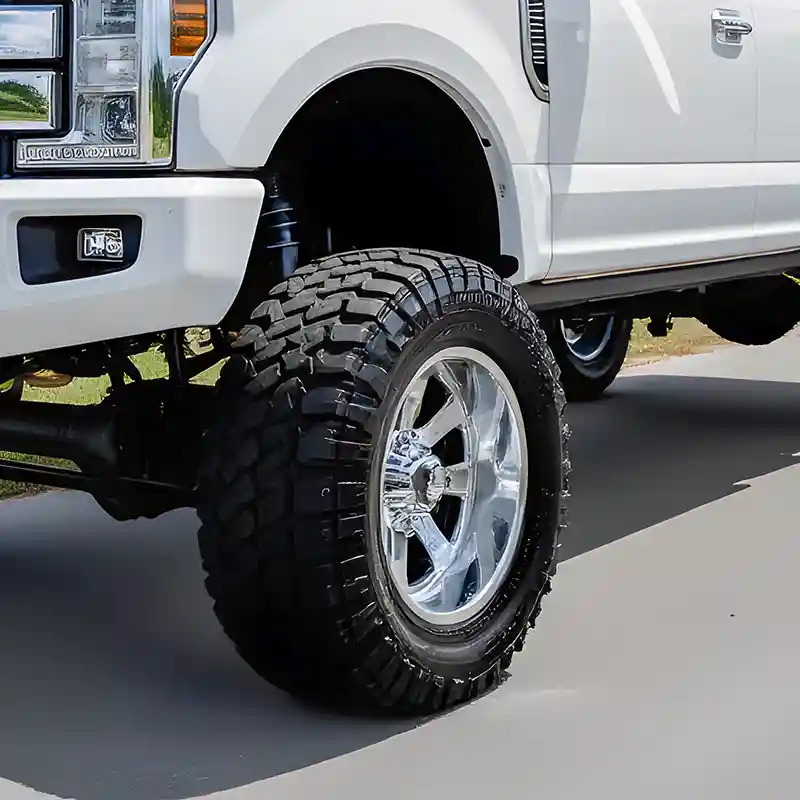
Choosing Wheels for a Lifted Truck
Learn about Choosing Wheels for a Lifted Truck based on wheel size, width, offset, backspacing, tire fitment, and driving needs. Find your setup!
Choosing Wheels for a Lifted Truck:Wheel Fitment Guide
Installing a lift kit can transform the appearance and capability of your truck. Once your truck is lifted, choosing the right wheels can help complete the look while supporting proper tire fitment and clearance.
However, selecting wheels for a lifted truck involves more than choosing a style you like. Wheel diameter, width, offset, backspacing, bolt pattern, and load capacity can all affect how your wheels and tires fit and perform.
The right wheels should complement your lift kit, tire size, suspension setup, and driving habits. Whether you’re building an off-road truck, upgrading a daily driver, or creating a custom show vehicle, proper wheel fitment is essential.
At Automotive Expressions, we help truck owners explore wheel and tire combinations based on their vehicles, modifications, and performance goals.
Start With Your Truck’s Specifications
Before shopping for wheels, gather the basic specifications for your truck.
You’ll need to know:
- Make, model, and year
- Lift kit type and height
- Current wheel size
- Current tire size
- Bolt pattern
- Wheel width
- Wheel offset
- Backspacing
- Brake clearance
- Intended tire size
Having these details can help narrow down your options and prevent fitment problems.
What Are the Common Wheel Sizes for Lifted Trucks?
Common wheel sizes for lifted trucks include 17-inch, 18-inch, 20-inch, and 22-inch wheels, although the best size depends on the truck, tire selection, lift height, and intended use.
17-inch wheels are popular for off-road-focused builds because they can accommodate tires with more sidewall. The additional sidewall can help absorb impacts and provide added protection when driving over rough terrain.
18-inch wheels offer a balance between off-road capability and street-oriented styling. They can be a versatile choice for trucks that see a combination of pavement and trails.
20-inch wheels are popular for drivers who want a larger, more aggressive appearance while maintaining a reasonable amount of tire sidewall.
22-inch wheels and larger are often chosen for custom and street-focused builds. They can create a dramatic appearance but typically require lower-profile tires, which may provide less cushioning and protection for serious off-road driving.
When choosing a wheel size, consider how the truck will actually be used. The largest wheel isn’t always the best option for performance or comfort.
What Is the Best Wheel Diameter for Off-Road Trucks?
For many off-road trucks, 17-inch wheels are a popular choice because they allow for a taller tire sidewall while still providing sufficient brake clearance for many applications. However, there is no single wheel diameter that is best for every off-road vehicle.
A smaller wheel with a taller tire can provide several advantages when driving on trails. The additional sidewall can help absorb impacts from rocks, roots, and uneven terrain. It may also provide more protection against wheel and tire damage when driving over rough surfaces.
Larger wheels with lower-profile tires may be better suited to trucks that spend most of their time on pavement or are built primarily for appearance.
When choosing an off-road wheel diameter, consider:
- Available tire sizes
- Tire sidewall height
- Brake clearance
- Off-road terrain
- Wheel durability
- Tire load rating
- Intended tire pressure
- Overall vehicle weight
For serious off-road use, choosing a wheel that allows enough tire sidewall for your driving conditions can be more important than selecting the largest wheel diameter available.
Choose the Right Wheel Diameter
Wheel diameter is one of the most noticeable decisions when building a lifted truck.
Common options include smaller wheels with taller tires or larger wheels with lower-profile tires.
Smaller Wheels With Taller Tires
A smaller wheel paired with a taller tire can provide more sidewall. This setup may offer:
- A softer ride
- Better cushioning over rough terrain
- Increased sidewall protection
- More flexibility at lower off-road tire pressures
- A traditional off-road appearance
This combination can be popular for trucks that spend significant time off-road.
Larger Wheels With Lower-Profile Tires
Larger wheels can create a more modern or aggressive appearance. Pairing them with lower-profile tires can also provide a more responsive feel on pavement.
However, lower-profile tires have less sidewall to absorb impacts, which may make them less suitable for certain types of off-road driving.
The best wheel diameter depends on how you use your truck.
Consider Wheel Width
Wheel width affects tire fitment and how the tire sits on the vehicle.
A wider wheel may be appropriate for a wider tire, but it can also affect clearance between the tire and suspension components.
When choosing wheel width, make sure it falls within the tire manufacturer’s approved range for your selected tire.
The goal is to create a properly matched wheel and tire package rather than simply choosing the widest wheel possible.
Understand Wheel Offset
Wheel offset is one of the most important measurements when choosing wheels for a lifted truck.
Offset determines how far the wheel sits inward or outward relative to the vehicle’s hub.
A more negative offset moves the wheel farther outward. This can create additional clearance between the tire and suspension components but may increase the risk of fender rubbing.
A more positive offset moves the wheel inward. This may help keep the tire inside the fender but could reduce clearance around suspension and steering components.
The right offset depends on your lift kit, tire size, wheel width, and desired stance.
How to Measure Wheel Offset
Knowing how to measure wheel offset can help you determine how a new wheel will position your tire in relation to your truck’s suspension and fenders. Wheel offset is measured in millimeters and represents the distance between the wheel’s centerline and its mounting surface.
To measure wheel offset, you’ll need to determine the wheel’s backspacing and overall width. The general calculation is:
Wheel Offset = Backspacing − Wheel Centerline
The exact calculation should account for how wheel width is measured. Wheel manufacturers typically list the width between the tire mounting surfaces rather than the wheel’s total outside width.
In general:
- Positive offset: The mounting surface sits toward the outside face of the wheel, positioning the wheel farther inward.
- Zero offset: The mounting surface is centered along the wheel’s centerline.
- Negative offset: The mounting surface sits toward the inside of the wheel, pushing the wheel farther outward.
When choosing wheels for a lifted truck, the correct offset can help provide clearance between the tire and suspension components while controlling how far the tire extends toward the fender.
If you’re unsure about your current wheel offset or the correct offset for a new wheel and tire combination, a professional fitment evaluation can help.
Don’t Overlook Backspacing
Backspacing is closely related to wheel offset and affects how far the wheel sits toward the inside of the truck.
Incorrect backspacing can cause a tire to sit too close to:
- Control arms
- Shocks
- Steering components
- Brake components
- Other suspension parts
When selecting wheels, consider both offset and backspacing to ensure the tire has adequate clearance.
Check the Bolt Pattern
Your new wheels must have the correct bolt pattern for your truck.
Bolt pattern includes the number of lug holes and the diameter of the circle formed by those holes.
A wheel with the wrong bolt pattern won’t properly fit your truck, even if the diameter and offset are correct.
Always verify the exact bolt pattern before ordering wheels.
Consider Wheel Load Rating
Lifted trucks are often used for off-road driving, towing, hauling, and other demanding applications. For these vehicles, wheel load capacity is an important consideration.
Make sure your wheels can safely support the weight of your truck, passengers, cargo, and equipment.
If you frequently tow or haul heavy loads, discuss your intended use with a wheel professional before choosing a wheel.
Your tires should also have an appropriate load index and load range for your vehicle and intended use.
Match Wheels to Your Tire Size
Your wheels and tires should be selected as a complete package.
Consider:
- Tire diameter
- Tire width
- Wheel diameter
- Wheel width
- Offset
- Backspacing
- Load rating
For example, installing a wider tire on a lifted truck may require a specific wheel width or offset to maintain proper clearance.
Choosing the wheels first without considering your desired tire size can limit your options.
How Lift Height Affects Wheel Selection
A lift kit can create additional room for larger tires, but the lift height doesn’t determine wheel fitment by itself.
A lifted truck may still experience rubbing if the wheel and tire combination is too wide or has an inappropriate offset.
Your lift height, tire size, wheel specifications, and suspension design all need to work together.
How to Avoid Tire Rubbing
Tire rubbing is one of the most common concerns when upgrading wheels and tires on a lifted truck.
Rubbing may occur during:
- Tight turns
- Suspension compression
- Off-road articulation
- Driving over bumps
- Heavy loads
To minimize rubbing, verify clearance between the tire and all nearby components.
Depending on your truck, you may need to consider a different wheel offset, backspacing, tire width, or additional modifications.
What Modifications Might Be Needed for Larger Tires?
Installing larger tires on a lifted truck may require additional modifications to achieve proper clearance. The modifications needed depend on your truck, lift kit, tire size, wheel offset, and how the suspension moves.
Potential modifications may include:
- Fender liner adjustments: Plastic or inner fender liners may need to be repositioned or trimmed to create additional clearance.
- Fender trimming: In some cases, minor trimming may be necessary to prevent the tire from contacting the fender during turns or suspension compression.
- Suspension modifications: Additional components may be needed to maintain proper suspension geometry or clearance.
- Wheel offset changes: Selecting a different offset can reposition the tire and help address clearance issues with suspension components or the fender.
- Bump stop adjustments: Modifying bump stops may help control suspension travel and prevent excessive tire contact.
- Steering adjustments: Some setups may require changes to steering components or steering stops to prevent rubbing at full lock.
- Additional lift or leveling: Depending on the vehicle and tire size, additional lift may be necessary to achieve adequate clearance.
It’s important to remember that larger tires don’t always require modifications, and the biggest possible tire isn’t necessarily the best choice. A properly matched wheel and tire combination can often minimize the need for extensive modifications.
Before installing larger tires, check clearance with the wheels turned fully in both directions and with the suspension compressed. This can help identify potential rubbing that may not be noticeable during normal driving.
Consider Your Driving Style
The best wheels for a lifted truck depend on how you plan to use it.
- Daily Driving: If your truck is primarily a commuter, you may prioritize ride comfort, road noise, handling, and appearance.
- Off-Road Driving: If you regularly drive on trails, consider wheels that can withstand the conditions you encounter. Wheel construction and durability become particularly important when driving over rocks, mud, and uneven terrain.
- Towing and Hauling: If you tow trailers or carry heavy loads, pay close attention to wheel and tire load ratings.
- Show and Custom Builds: If appearance is your top priority, you may have more flexibility with wheel size and style. However, even custom builds require proper fitment and adequate clearance.
Should You Use Stock Wheels on a Lifted Truck?
You may be able to keep your factory wheels after installing a lift kit. However, stock wheels have fixed specifications for width, offset, and backspacing.
If you’re installing significantly larger or wider tires, aftermarket wheels may provide more flexibility.
Changing wheel offset can also help achieve a specific stance, although moving the wheels too far outward may increase fender rubbing.
Choose the Right Wheel Style
Once you’ve confirmed fitment, you can focus on appearance.
Popular wheel styles for lifted trucks include:
- Matte or gloss finishes
- Machined accents
- Deep-dish designs
- Multi-spoke wheels
- Beadlock-style wheels
- Classic off-road designs
Choose a style that complements your truck’s body, lift height, and tire selection.
For serious off-road use, make sure the wheel’s construction and specifications are appropriate for the terrain you plan to drive.
Consider Wheel Weight
Wheel weight can affect your truck’s performance.
Heavier wheels may contribute to increased unsprung weight, which can affect acceleration, braking, handling, and suspension response.
Lighter wheels may help reduce weight, but durability and load capacity should never be sacrificed for weight alone.
The ideal balance depends on your vehicle and how you use it.
Get Professional Wheel and Tire Fitment
Choosing wheels for a lifted truck requires careful consideration of more than appearance. Wheel diameter, width, offset, backspacing, bolt pattern, load capacity, and tire size all work together to determine the final fitment.
At Automotive Expressions, we can help you explore wheel and tire combinations based on your truck, lift kit, and driving needs. Whether you’re building an off-road rig, upgrading a daily driver, or creating a custom truck, the right wheel and tire package can help complete your build.
Contact Automotive Expressions to learn more about choosing wheels for your lifted truck and finding a setup that fits your vehicle properly.
Frequently Asked Questions About Choosing Wheels for a Lifted Truck
What size wheels are best for a lifted truck?
The best wheel size depends on your truck, lift kit, tire size, and intended use. Smaller wheels with taller tires are often preferred for off-road driving, while larger wheels with lower-profile tires may offer a more aggressive street-oriented appearance.
What is the best wheel diameter for off-road trucks?
For many off-road trucks, 17-inch wheels are a popular choice because they allow for more tire sidewall while providing sufficient brake clearance for many applications. However, the ideal diameter depends on your specific truck, brakes, tire selection, and driving conditions.
What are the most common wheel sizes for lifted trucks?
17-inch, 18-inch, 20-inch, and 22-inch wheels are common choices for lifted trucks. Smaller wheels typically allow for more tire sidewall, while larger wheels can provide a more aggressive appearance.
Does wheel offset matter on a lifted truck?
Yes. Wheel offset affects where the tire sits in relation to the suspension and fender. The wrong offset can contribute to tire rubbing or clearance problems.
How do I measure wheel offset?
Wheel offset can be determined by measuring the wheel’s backspacing and calculating the distance between the wheel’s centerline and mounting surface. The general formula is offset = backspacing minus wheel centerline, with the final calculation accounting for how wheel width is measured.
Can I use my stock wheels after lifting my truck?
Often, yes. However, your stock wheels’ width, offset, and backspacing may limit your tire options. Aftermarket wheels can provide more flexibility when installing larger or wider tires.
How do I prevent tire rubbing on my lifted truck?
Choose a properly matched wheel and tire combination based on tire width, diameter, wheel offset, backspacing, and available clearance. Depending on the setup, additional modifications may be necessary.
What modifications might be needed for larger tires?
Depending on the truck and tire size, modifications may include fender liner adjustments, fender trimming, suspension changes, bump stop adjustments, steering changes, or different wheel offset and backspacing.
How do I choose the right wheels for my lifted truck?
Start by identifying your truck’s specifications, lift height, desired tire size, and intended use. Then select a wheel with the appropriate diameter, width, offset, backspacing, bolt pattern, and load rating. The wheel should provide adequate clearance while complementing your tire choice and driving needs.
Can Automotive Expressions help me choose wheels for my lifted truck?
Yes. Automotive Expressions can help you evaluate wheel diameter, width, offset, backspacing, tire size, and other fitment factors to help you find the right wheels for your lifted truck.