Chevrolet Fitment Guide | Wheels, Tires & Suspension
Explore our Chevrolet Fitment Guide for wheel, tire, and suspension fitment guidance for Silverado, Tahoe, Suburban, Colorado, and Corvette. Contact Automotive Expressions today.
Chevrolet Fitment Guide:Wheels, Tires & Suspension for Silverado, Tahoe, Suburban, Colorado and Corvette
Chevrolet vehicles offer a wide range of customization potential, from leveled Silverado trucks and trail-ready Colorado builds to refined Tahoe and Suburban SUV packages and performance-focused Corvette wheel setups. However, each Chevrolet platform has its own wheel, tire, brake, suspension, and load-capacity requirements. The Chevrolet Fitment Guide helps owners understand the key fitment considerations for popular Chevrolet models before selecting aftermarket components.
A wheel that fits a Silverado 1500 may not fit a Colorado from a different generation. A tire package that works on a lifted Colorado may be unsuitable for a Tahoe used for towing. A Corvette wheel setup requires considerably more attention to tire width, brake clearance, wheel weight, staggered fitment, and suspension geometry than a full-size SUV.
Correct fitment is the starting point for any wheel, tire, lift, leveling, lowering, or suspension upgrade. At Automotive Expressions, we help Chevrolet owners in Flowery Branch, GA, and across North Georgia plan vehicle-specific custom wheel, tire, suspension, and accessory packages. We look at the complete build, including wheel diameter, width, bolt pattern, hub fitment, offset, backspacing, brake clearance, tire size, load ratings, ride height, alignment, and intended vehicle use. Automotive Expressions provides custom wheels and tires, lift kits, lowering kits, truck accessories, and professional installation for drivers throughout the northern Atlanta area.
Why Chevrolet Fitment Varies
Chevrolet uses different wheel bolt patterns, hub bores, wheel offsets, brake packages, tire sizes, and suspension designs across its truck, SUV, midsize, and performance-car platforms. Even vehicles that appear similar can have important compatibility differences.
For example, Silverado 1500, Tahoe, and Suburban models commonly use a 6×139.7 mm bolt pattern, also written as 6×5.5 inches. Some Chevy Colorado generations use that pattern, while second-generation Colorado trucks use a different 6×120 mm pattern.
This is why a wheel should never be chosen by appearance or lug count alone. Before purchasing aftermarket wheels, tires, or suspension components, verify:
- Exact vehicle year, make, model, trim, drivetrain, and axle configuration
- Wheel bolt pattern
- Hub bore and hub-centric fitment needs
- Lug-nut thread size, seat type, and torque requirements
- Wheel diameter and width
- Wheel offset and backspacing
- Brake-caliper and brake-rotor clearance
- Tire size and approved wheel-width range
- Tire load index, speed rating, and load range where applicable
- Wheel load rating
- Fender, suspension, steering, and body clearance
- Factory or modified ride height
- Alignment requirements
- Towing, hauling, off-road, performance, or daily-driving use
Your Chevrolet’s Tire and Loading Information label, typically located on the driver-side door jamb, provides a useful starting point for factory tire size and recommended cold tire pressure. Chevrolet also offers Tire Fill Alert on select models to help drivers inflate tires to recommended pressure.
Chevrolet Silverado Fitment
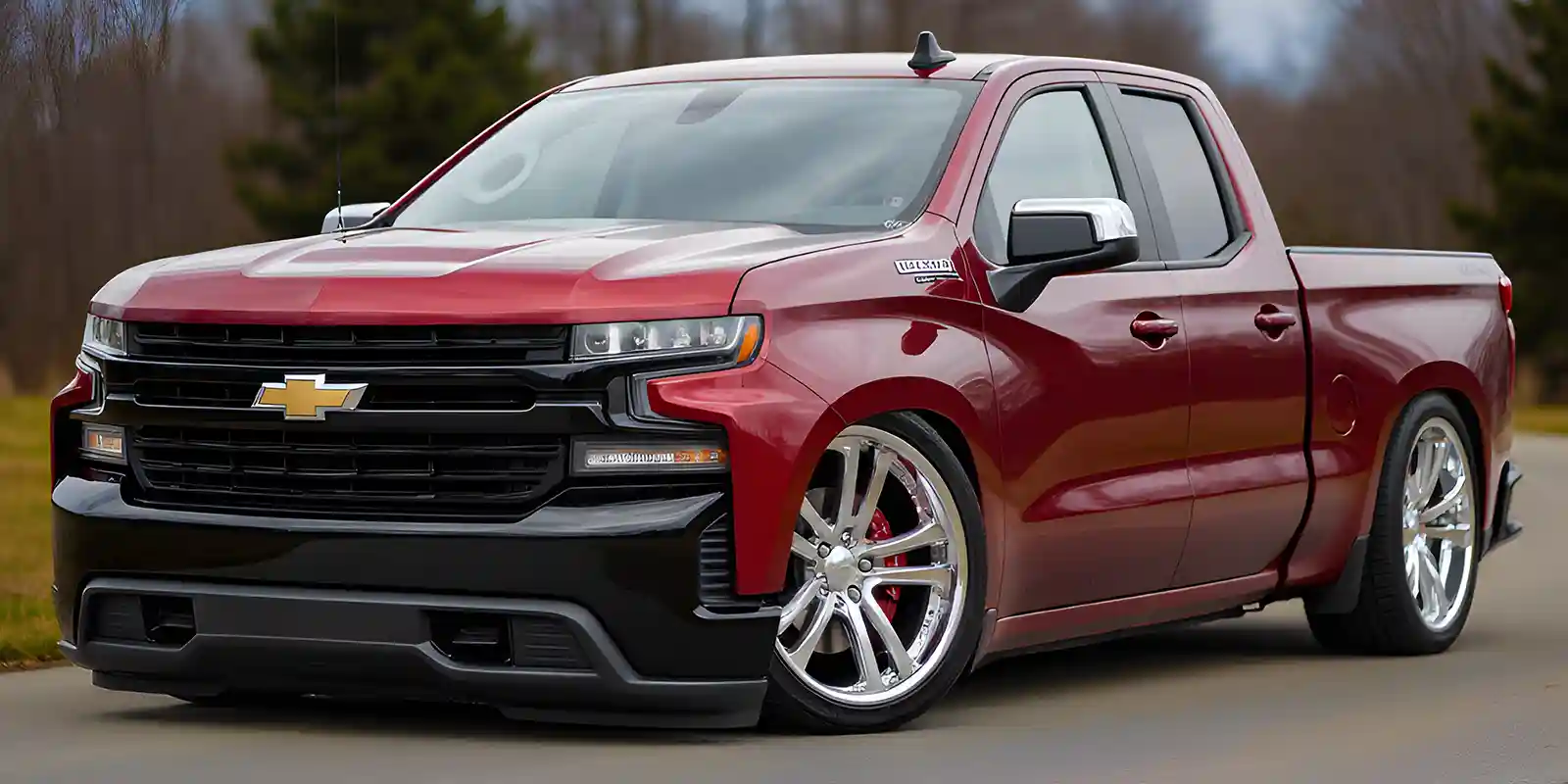
The Chevrolet Silverado is one of the most frequently customized trucks in North Georgia. Owners often add aftermarket wheels, larger tires, leveling kits, lift kits, bed covers, power steps, and other accessories to create a more capable, personalized, or aggressive build.
Most Silverado 1500 trucks from 1999 through current generations use a 6×139.7 mm bolt pattern. This is also known as 6×5.5 inches. Silverado 2500HD and 3500HD models use eight-lug wheel patterns and require wheels designed specifically for their heavier-duty truck applications.
Silverado Wheels and Tires
For Silverado 1500 trucks, popular aftermarket wheel diameters often range from 17 to 22 inches. The best option depends on tire sidewall needs, brake clearance, daily driving, towing demands, road quality, and desired appearance.
- 17-inch wheels can be practical for off-road-oriented builds that benefit from taller tire sidewalls, provided they clear the truck’s brake package.
- 18-inch wheels often provide a useful balance for all-terrain tires, towing, daily driving, and mixed-use trucks.
- 20-inch wheels are popular for modern street-truck and leveled-truck builds.
- 22-inch wheels are typically more appearance-focused and can require lower-profile tires, which may reduce pothole protection and ride comfort.
Wheel offset and backspacing determine where the wheel and tire sit under the truck. A lower or negative offset can create a wider stance, but it can also increase tire poke, mud and road-spray exposure, fender contact, and the need for trimming.
Silverado Lifts and Leveling Kits
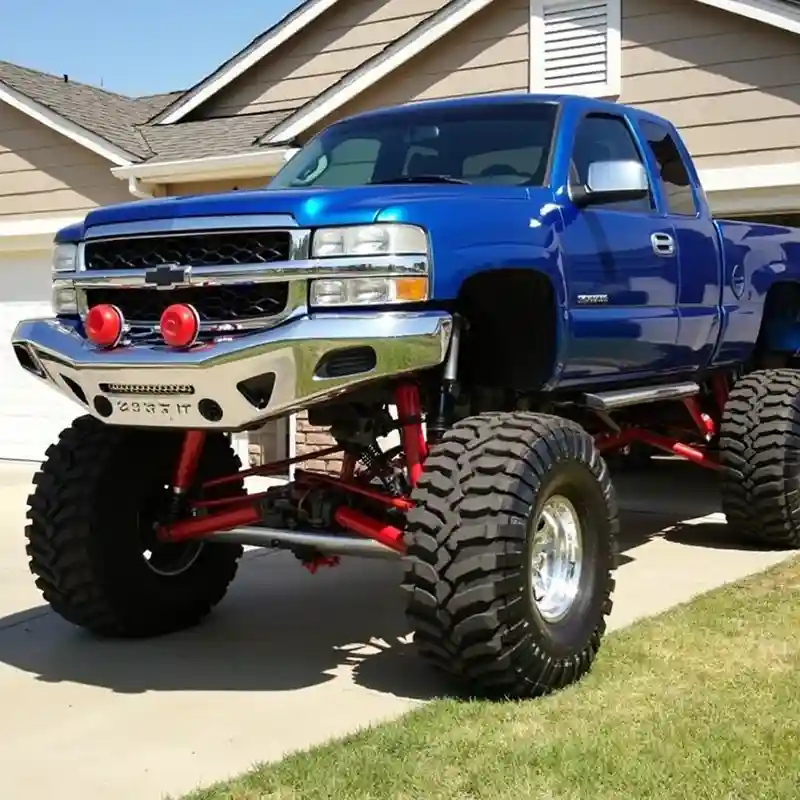
A leveling kit raises the front of the truck to reduce factory rake, while a lift kit raises the truck’s overall ride height and can create room for larger tires. Neither modification guarantees clearance for every wheel and tire package.
Before installing a larger tire, verify full steering-lock clearance, suspension compression clearance, upper-control-arm clearance, fender-liner clearance, wheel offset, backspacing, tire diameter, tire width, alignment needs, and possible trimming requirements.
Silverado trucks used for towing or hauling should prioritize tire and wheel load ratings, appropriate tire pressure, trailer tongue weight, axle ratings, and practical tire sidewall. Larger wheels, aggressive tires, and suspension changes do not increase the truck’s factory payload or towing ratings.
Chevrolet Tahoe Fitment
The Chevrolet Tahoe combines full-size SUV passenger capacity with towing capability and strong aftermarket potential. Tahoe owners may choose larger wheels, all-terrain tires, premium street tires, leveling kits, lift kits, and exterior accessories based on whether the SUV is used for family transportation, towing, work, road trips, or mild off-road travel.
Most modern Tahoe models use a 6×139.7 mm bolt pattern. This is the same common pattern used by many Silverado 1500 and Suburban models, but shared bolt pattern does not guarantee direct wheel interchangeability. Verify hub bore, brake clearance, offset, wheel width, load rating, and tire clearance for the exact vehicle.
Tahoe Wheel and Tire Priorities
Tahoes are often equipped with 18- to 22-inch wheels, depending on trim and generation. For many drivers, an 18-inch or 20-inch wheel provides a practical balance of tire sidewall, comfort, tire availability, towing capability, and customized appearance.
A 22-inch wheel can create a more premium, street-oriented look, but it typically requires a lower-profile tire. If the Tahoe is frequently driven on rough roads, used for long-distance trips, or carries passengers and cargo, additional tire sidewall may offer better ride comfort and impact protection.
Tahoe wheel-and-tire selection should consider:
- Passenger and cargo loads
- Trailer towing needs
- Tire load index
- Wheel load rating
- Road-noise preferences
- Ride comfort
- Weather conditions
- Wheel weight and overall assembly weight
- Factory or modified ride height
- Fender clearance during turns and suspension compression
Tahoe Suspension Options
A modest leveling kit can create a more even stance and allow room for certain tire upgrades. A lift kit may be appropriate for drivers who need more ground clearance, larger all-terrain tires, or a rugged SUV appearance.
After modifying ride height, schedule an alignment inspection. Alignment angles such as camber, caster, and toe influence handling, steering stability, and tire wear. Any new vibration, pulling, irregular tire wear, or tire rubbing should be diagnosed promptly.
Chevrolet Suburban Fitment
The Chevrolet Suburban shares many fitment characteristics with the Tahoe but has a longer body and is often used for larger families, commercial transportation, cargo hauling, road trips, and towing. Its additional size and passenger capacity make tire and wheel load ratings especially important.
Most modern Suburban models use a 6×139.7 mm bolt pattern. Although it commonly shares wheel-fitment basics with the Tahoe and Silverado 1500, every wheel package should still be checked for the exact model year, trim, brake package, wheel width, offset, hub fitment, and load rating.
Suburban Wheel and Tire Choices
For a Suburban used for family travel, towing, airport transportation, business use, or long-distance driving, ride quality and load capability are often as important as appearance.
A practical setup may include:
- An 18-inch or 20-inch wheel
- A touring, highway, or all-season tire
- Adequate tire load index
- A wheel rated for the vehicle’s use
- Moderate wheel offset to preserve clearance and reduce road spray
- Enough sidewall to support comfort and pothole protection
For a more customized look, 22-inch wheels may be appropriate if paired with compatible tires and proper clearance. The key is to avoid sacrificing load capability, tire durability, passenger comfort, or towing needs for appearance alone.
Suburban Towing and Load Considerations
A Suburban may carry several passengers, luggage, sports equipment, business supplies, or trailer tongue weight at the same time. Tire capacity, wheel load rating, inflation pressure, and suspension condition must be suitable for those real-world demands.
Do not calculate safe vehicle capacity by multiplying a tire’s maximum load by four. Loads are not distributed evenly in every driving situation, especially under braking, cornering, towing, or uneven pavement. Follow Chevrolet’s vehicle-specific gross vehicle weight rating, gross axle weight ratings, payload limits, towing guidance, and the limits of the lowest-rated component.
Chevrolet Colorado Fitment
The Chevrolet Colorado is a midsize pickup with strong potential for daily driving, work use, trail travel, overlanding, and custom off-road builds. Its fitment requirements vary considerably by generation.
First-generation Colorado trucks generally use a 6×139.7 mm bolt pattern. Second-generation Colorado models generally use a 6×120 mm bolt pattern. Third-generation Colorado trucks return to the 6×139.7 mm pattern commonly used by Silverado 1500 trucks and full-size Chevy SUVs.kipardoracing+2
Because of those generation differences, Colorado owners should never assume that a Silverado wheel will fit. The bolt pattern, hub bore, offset, brake clearance, wheel width, and tire size all need confirmation before purchasing.
Colorado Wheels and Tires
Many Colorado owners choose 17-inch or 18-inch wheels because they provide useful tire sidewall for all-terrain tires, gravel roads, trail use, and practical daily driving. A 20-inch wheel may be suitable for a street-focused build, but it generally reduces available tire sidewall.
For a Colorado wheel-and-tire package, verify:
- Vehicle generation and exact bolt pattern
- Hub bore and hub-centric fitment
- Wheel width and tire manufacturer-approved range
- Offset and backspacing
- Brake-caliper clearance
- Tire diameter and true measured size
- Upper-control-arm, suspension, and steering clearance
- Fender-liner, bumper, and valance clearance
- Lift or leveling-kit height
- Tire load rating and vehicle load requirements
- Need for trimming or clearance modifications
Colorado Off-Road and Overland Fitment
Colorado ZR2, Trail Boss, and off-road-oriented builds may use larger all-terrain or mud-terrain tires, aftermarket wheels, lift kits, bed racks, recovery equipment, rooftop tents, lighting, and other accessories.
Those additions can increase vehicle weight and alter clearance needs. A truck that clears its tires while empty may rub when loaded, turning sharply, or articulating on uneven terrain. Plan the wheel, tire, suspension, cargo, and accessory package together.
Chevrolet Corvette Fitment
Corvette fitment is performance-focused and requires more precision than most truck or SUV applications. Wheel width, offset, brake clearance, tire construction, tire diameter, wheel weight, and suspension geometry can all affect the Corvette’s handling, traction, braking, steering response, and tire wear.
Modern Corvette generations use different specifications, so year, trim, brake package, and wheel configuration must be confirmed before ordering. Corvettes often use a staggered wheel setup, meaning the rear wheels and tires are wider than the fronts. This arrangement can support rear traction and the Corvette’s intended handling balance.
Corvette Wheel and Tire Considerations
Common Corvette aftermarket wheel diameters include 18, 19, 20, and 21 inches, depending on the generation and build goal. The right size depends on the brake package, tire availability, desired sidewall, wheel weight, and driving use.
For a Corvette, consider:
- Exact bolt pattern and center bore
- Front and rear wheel widths
- Staggered or square wheel-and-tire configuration
- Offset and brake-caliper clearance
- Tire load index and speed rating
- Tire compound and operating temperature range
- Overall front-to-rear tire-diameter compatibility
- Suspension ride height
- Alignment settings
- Fender clearance during steering and suspension compression
- Intended street, autocross, track, or drag-racing use
A lightweight wheel can reduce rotational and unsprung mass, which may contribute to a more responsive driving feel. But wheel weight must be balanced with strength, brake clearance, tire fitment, and intended driving conditions.
Corvette Suspension and Alignment
Lowering springs, coilovers, performance shocks, adjustable control arms, and alignment changes can affect Corvette fitment and handling. A lower ride height can improve visual stance, but excessive lowering may reduce suspension travel, create tire contact, and increase the need for alignment correction.
Camber, caster, and toe all influence performance and tire wear. For street-driven Corvettes, use alignment settings appropriate for normal road use and tire longevity. For track-focused vehicles, alignment goals may differ, but changes should be planned by a qualified professional who understands the vehicle and intended driving conditions.
Chevrolet Fitment at a Glance
Chevrolet Vehicle |
Common Bolt Pattern |
Primary Fitment Priorities |
|
Silverado 1500 |
6×139.7 mm |
Wheel offset, tire clearance, lifts, leveling, towing and load ratings |
|
Tahoe |
6×139.7 mm |
Passenger comfort, towing capability, wheel load rating, tire sidewall, ride height |
|
Suburban |
6×139.7 mm |
Load capacity, family travel, towing, tire durability, comfort, wheel rating |
|
Colorado Gen. 1 |
6×139.7 mm |
Midsize-truck offset, tire clearance, all-terrain fitment, trail use |
|
Colorado Gen. 2 |
6×120 mm |
Generation-specific wheels, hub fitment, offset, lifts and tire clearance |
|
Colorado Gen. 3 |
6×139.7 mm |
Off-road fitment, all-terrain tires, suspension clearance, overland loads |
|
Corvette |
Varies by generation |
Staggered sizing, brake clearance, wheel weight, performance tires, alignment |
These references are general starting points. Exact specifications can vary by model year, trim, brake package, drivetrain, factory wheel configuration, and existing vehicle modifications. Confirm the specific components before placing an order or scheduling installation.kipardoracing+1
Get Chevrolet Fitment Help in North Georgia
The right Chevrolet wheel, tire, and suspension package should fit your exact vehicle, support your intended use, and work as a complete system. The Chevrolet Fitment Guide provides model-specific information to help you understand key considerations before choosing aftermarket components. A Silverado used for towing needs different priorities from a Colorado built for trails. A Suburban used for family road trips needs a different approach than a Corvette built for performance driving.
Automotive Expressions is a local, family-owned wheel, tire, suspension, and truck-accessory shop in Flowery Branch, GA. We serve Chevrolet owners throughout Gainesville, Buford, Suwanee, Sugar Hill, Cumming, Duluth, Alpharetta, Johns Creek, Lawrenceville, and surrounding North Georgia communities.
Use the Chevrolet Fitment Guide to explore model-specific considerations, then contact Automotive Expressions today to discuss Chevrolet wheel fitment, tire sizing, bolt patterns, wheel offset, backspacing, load ratings, lift-kit clearance, leveling-kit options, Corvette performance wheels, and professional installation for your Silverado, Tahoe, Suburban, Colorado, or Corvette.