Best Lift Kit for Tacoma | Height, Ride & Off‑Road Guide
Discover the best lift kit for your Toyota Tacoma based on trim, drivetrain, tire clearance, ride quality, and terrain. Contact Automotive Expressions for expert setup and installation.
Best Lift Kit for Tacoma:How to Choose the Right Lift for Your Truck
The best lift kit for a Tacoma isn’t just the tallest option or the most aggressive stance. The ideal system should match your Tacoma’s generation, cab/bed configuration, drivetrain (4×4 vs. 4×2), tire goals, payload needs, and how you plan to use the truck—daily driving, trails, overlanding, towing, or a mix of everything.
A commuter Tacoma, a weekend trail rig, a dedicated overland build, and a work-focused truck all benefit from different lift heights, spring rates, and dampers. What works great for one owner can cause poor alignment range, rubbing with larger tires, harsh ride quality, or reduced towing stability for another.
At Automotive Expressions, we help Tacoma owners in Flowery Branch, GA, and across North Georgia choose lift kits, leveling kits, tires, wheels, and supporting upgrades that function together as a complete system. Whether you want a mild level for 33s, a premium coilover lift for off-road control, or a practical setup for towing and daily use, this guide will help you ask the right questions and select the best lift kit for your Tacoma.
Start With Tacoma Lift Fitment
Tacoma suspension geometry and fitment vary by generation and trim, so don’t buy a kit based solely on the model name. The control arm design, front strut configuration, rear leaf pack, shock length, CV angles, driveshaft angle, and brake-line routing differ between 2nd Gen (2005–2015) and 3rd Gen (2016–present) trucks, and can change further with TRD packages.
Most Tacomas use a double-wishbone front with coilover struts and leaf-spring rear. TRD Pro models often include upgraded shocks that affect spacer and coilover compatibility. Manual- vs. auto-transmission and 4×4 vs. 4×2 can also influence driveshaft and differential considerations at certain lift heights.
Before installing a lift, verify component compatibility for your specific year, drivetrain, and intended tire size, and plan supporting parts like upper control arms (UCAs), differential drop spacers, carrier bearing drops, and brake-line extensions as needed.
Before choosing a lift kit, confirm:
- Your Tacoma’s year, trim (SR, SR5, TRD Sport, TRD Off-Road, TRD Pro), drivetrain, cab/bed length, and factory suspension package
- Target tire size and actual mounted dimensions
- Desired lift height (leveling 1–2 in., mid-lift 2–3 in., or 3+ in.)
- Alignment needs and whether aftermarket UCAs are required
- Shock type: spacer, twin-tube, monotube, or adjustable coilover
- Rear solution: add-a-leaf, blocks, shackles, new leaf pack, or progressive pack
- Brake-line length and ABS wire routing
- Front CV and ball-joint angles on 4×4 models
- Load capacity for towing, bed racks, campers, or gear
- Fender, cab-mount, pinch-weld, and body-mount clearance
A kit can provide the advertised lift but still be a poor choice if it limits alignment, over-extends shocks, binds CVs, reduces payload control, or fails to clear your intended tire size without trimming.
Recommended Tacoma Lift Heights
The best lift height depends on tire clearance, ride quality, center of gravity, and how you use the truck. Common Tacoma options range from a mild 1–2 inch level to 2–3 inch performance lifts and select 3+ inch builds. Availability and fitment vary by generation and trim.
Lift Height |
Best For |
Key Considerations |
|
1–2 inch leveling |
Daily driving, mild trails, fitting slightly larger tires |
Often works with factory rear; minimal geometry changes |
|
2–3 inch lift |
Balanced off-road control, 32–33 inch tires, overlanding |
May require UCAs, alignment correction, and diff drop on 4×4 |
|
3+ inch lift |
Maximum clearance, aggressive trails, show builds |
Greater impact on driveline angles; trimming and gearing may be needed |
1–2 Inch Leveling Kits for Tacoma
A 1–2 inch front level is a popular first step because it evens out factory rake and allows room for slightly larger tires. Spacer levels are budget-friendly, while spring/coilover levels improve ride control and front-end support for light armor or accessories.
Confirm alignment capability on your specific trim; some Tacomas benefit from aftermarket UCAs for proper caster at the higher end of this range.
2–3 Inch Performance Lifts
A 2–3 inch lift with tuned monotube or adjustable coilover shocks is the sweet spot for many Tacoma owners. It clears 32–33 inch tires on appropriate wheels, increases suspension travel, and improves damping over washboards, gravel, and forest roads.
For North Georgia drivers, pairing quality front coilovers with a rear add-a-leaf or progressive leaf pack provides better load handling for camping gear or tools without a harsh ride.
3+ Inch Advanced Builds
Going beyond three inches delivers bold stance and additional clearance, but requires a systems approach. Expect to address driveline and CV angles, extended shocks, longer brake lines, and potential trimming around the cab mount or liners.
If you frequently tow, travel rough job sites, or run rocky trails, consider whether a slightly lower lift with better shocks and tire choice may deliver more real-world performance and reliability.
Tire Fitment With Lifts
The tire you choose determines how much trimming and offset management you’ll need. Section width, tread pattern, and true mounted diameter all matter—not just the size on the sidewall.
Work with Automotive Expressions to finalize wheel width and offset so the tire clears UCAs, body mounts, and fender liners while maintaining proper scrub radius and steering feel.
Popular Tacoma Lift Kit Styles
Lift style is personal, but certain approaches pair especially well with Tacoma platforms and common build goals.
Leveling Spacer Kits
Top-mount or preload spacers deliver a cost-effective front lift to reduce rake and fit slightly larger tires. They retain factory springs and are great for daily drivers that see occasional dirt roads.
Choose corrosion-resistant hardware and confirm shock travel to avoid top-out on rough terrain.
Performance Coilover Systems
Adjustable coilovers with matched rear shocks provide superior control on washboards, ruts, and rocky climbs. They’re ideal for overlanding, forest service roads, and drivers who value precise damping and height tuning.
Pair with tubular or billet UCAs for alignment range and better articulation, especially at 2–3 inches of lift.
Add‑A‑Leaf and Leaf Pack Upgrades
Rear add‑a‑leafs boost capacity and reduce sag with bed racks, campers, or tools. Full replacement or progressive packs improve ride comfort and control over choppy surfaces.
These are common on trucks that carry gear regularly but still need compliant on-road manners for commuting and family use.
Long‑Travel and Expedition Setups
For serious trail work and high-speed desert runs, long‑travel kits widen track width and increase wheel travel dramatically. They’re often chosen for dedicated builds and show-stopping stance.
Expect custom tuning, fiberglass fenders, re-gearing, and frequent maintenance. If you want capability without the complexity, a quality 2–3 inch coilover system may be the smarter choice.
Wheel Offset and Backspacing Matter
Choosing the best lift kit for a Tacoma isn’t just about springs and shocks—wheel offset and backspacing directly affect fitment after the lift. These specs decide how far your wheels sit from suspension parts and fenders, which is crucial for avoiding rubbing once you step up to taller, wider tires.
Many Tacoma trims ship with relatively positive offsets that keep the wheel tucked closer to the hub. Factory values vary by generation and wheel width, but the takeaway is the same: stock geometry is designed for conservative tire sizes and tight clearances.
Aftermarket wheels often reduce positive offset or move into zero/negative territory to push the tire outward. That can help clear upper control arms on lifted Tacomas and deliver a wider stance, but it also changes how and where rubbing can occur.
Lower Offset and Negative Offset Wheels
A lower or negative-offset wheel may:
- Push the wheel and tire outward for added sidewall clearance at UCA/knuckle
- Deliver a wider, more aggressive stance to complement the lift
- Increase the chance of fender and liner contact at full stuff or turn
- Kick up more road debris along the truck’s sides
- Alter scrub radius, steering weight, and component loading
- Necessitate trimming, caster adjustments, or narrower tire choices
More aggressive offset isn’t automatically better on a lifted Tacoma. The ideal spec depends on wheel width, tire size (diameter and section width), lift height, suspension travel, alignment targets, and how you plan to drive—daily commute, overlanding, or trails.
Backspacing
Backspacing measures from the hub-mounting pad to the inner wheel lip. On lifted Tacomas, it works with offset to determine inner clearance around the upper control arm, spindle, brake lines, and coilover bodies.
It’s possible to clear the fender but still rub the suspension with too much backspacing. Conversely, too little backspacing can push the tire outward and cause contact at the fender or bumper during compression. Reviewing offset and backspacing together—alongside your chosen lift kit and tire—is essential for a trouble-free setup.
Best Wheels for Lifted and Leveled Tacomas
A quality Tacoma lift kit or leveling kit opens room for larger tires, but it doesn’t guarantee unlimited clearance. The correct wheel pairs with your tire size, lift height, and target stance—while keeping trimming and alignment corrections manageable.
For a practical daily-driven build, many Tacoma owners pair a 17-inch wheel with a versatile all-terrain tire. This maintains adequate sidewall for off-road compliance and protects wheels on the trail without making the truck unwieldy.
As lift height and tire diameter increase, wheel width and offset become more sensitive. A wider wheel or aggressive offset can nail the look, but may introduce rubbing at full lock or under articulation if not matched to your suspension geometry.
Before installing larger wheels and tires, confirm:
- Full-lock steering clearance
- Clearance during suspension compression and articulation
- Space around upper control arms, coilovers, and brake components
- Fender-liner and bumper/valance clearance
- Brake-caliper clearance
- Tire diameter and section width
- Actual wheel offset and backspacing
- Required alignment targets (caster/camber/toe)
- Whether trimming, body-mount chop, or clearance mods are needed
A professional fitment review from Automotive Expressions helps ensure your wheel, tire, and lift kit combination performs as good as it looks—on pavement and on the trail.
Tacoma Lift Kits for Towing and Hauling
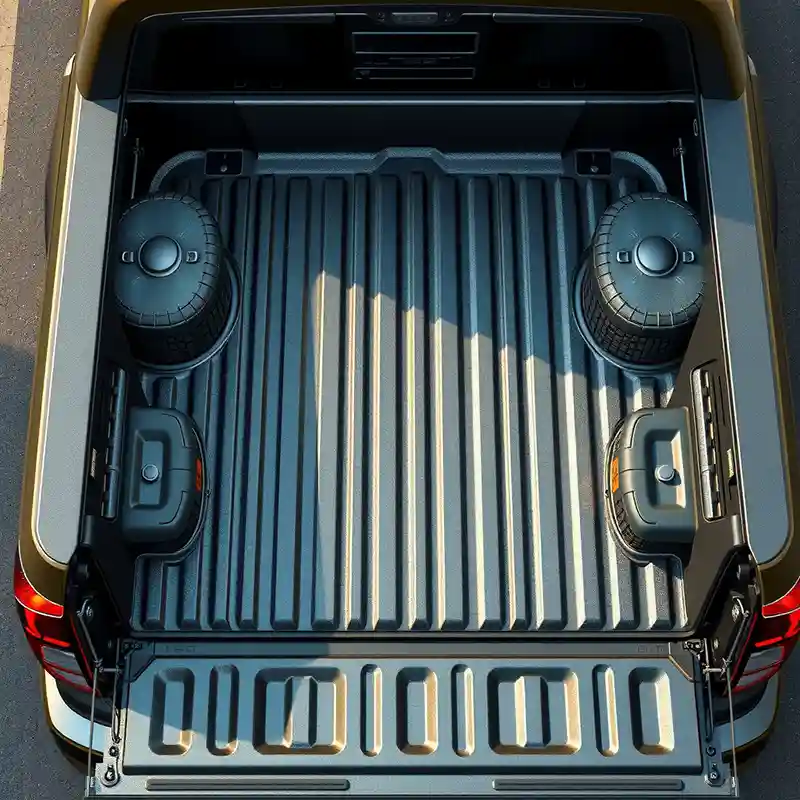
If your Tacoma regularly tows, carries gear, or hauls work equipment, factor load management into your lift kit choice. Spring rates, shock valving, and rear support options (add-a-leaf, progressive leaf packs, or airbags) should match your real-world payload and tongue weight.
Select components with ratings and designs that meet or exceed your needs. Heavier tires, wheels, and armor add weight that influences acceleration, braking, fuel economy, rake, and rear sag under load—consider these when choosing spring rates and helper systems.
For towing and hauling setups, evaluate:
- Rear spring rate and load support (AAL, leaf packs, airbags)
- Shock valving tuned for weight and heat management
- Tire load index/load range and proper inflation pressure
- Vehicle payload rating
- Front and rear gross axle weight ratings
- Trailer tongue weight and weight-distribution hitch needs
- Brake condition and potential upgrades
- Hitch and trailer ratings
- Tire construction and tread for stability
- Wheel diameter and sidewall height for control
Adding a lift kit, aftermarket wheels, or larger tires does not increase the Tacoma’s factory tow or payload ratings. Always follow Toyota’s specifications and respect the limits of the lowest-rated component in your setup.
Popular Tacoma Lift Kit Brands
Automotive Expressions offers lift solutions from proven manufacturers to suit daily drivers, weekend wheelers, and overland builds. Depending on your goals and budget, Tacoma owners often consider systems from brands known for engineered geometry, reliable damping, and proper spring rates.
The right kit depends on shock type (twin-tube, monotube, remote reservoir), travel, coilover adjustability, rear leaf options, included UCAs, and compatibility with your wheel/tire plans. Don’t choose a kit by name alone—optimal performance comes from matching the exact components to your truck’s weight, intended terrain, and driving style.
Get Tacoma Lift Kit Guidance in North Georgia
The best lift kit for a Tacoma is the one that fits correctly, supports your load and driving demands, aligns within spec, and achieves the look and capability you want. Whether you’re building a mild leveled commuter, a trail-ready weekend rig, a tow-friendly work truck, or an overland platform, thoughtful planning prevents rubbing, wander, and premature wear.
Automotive Expressions is a local, family-owned wheel, tire, suspension, and truck accessory shop in Flowery Branch, GA. We help Tacoma owners throughout Gainesville, Buford, Suwanee, Sugar Hill, Cumming, Duluth, Alpharetta, Johns Creek, Lawrenceville, and surrounding North Georgia communities.
Contact Automotive Expressions today to discuss the best lift kit for your Tacoma, spring and shock options, UCAs, tire sizing, wheel offset and backspacing, towing-focused upgrades, and professional installation tailored to your truck.