Spacer vs Offset | How To Dial In Track Width and Clearance
Learn the real-world differences between wheel spacers and wheel offset for trucks, Jeeps, and SUVs. Understand stance, clearance, handling effects, and safety best practices. Contact us today.
Wheel Spacers vs. Offset:What’s the Difference?
Wheel fitment starts with understanding offset and when a spacer can (or cannot) solve a clearance problem. Both change how far the wheel sits in or out of the fender, but they do it differently and with unique trade-offs.
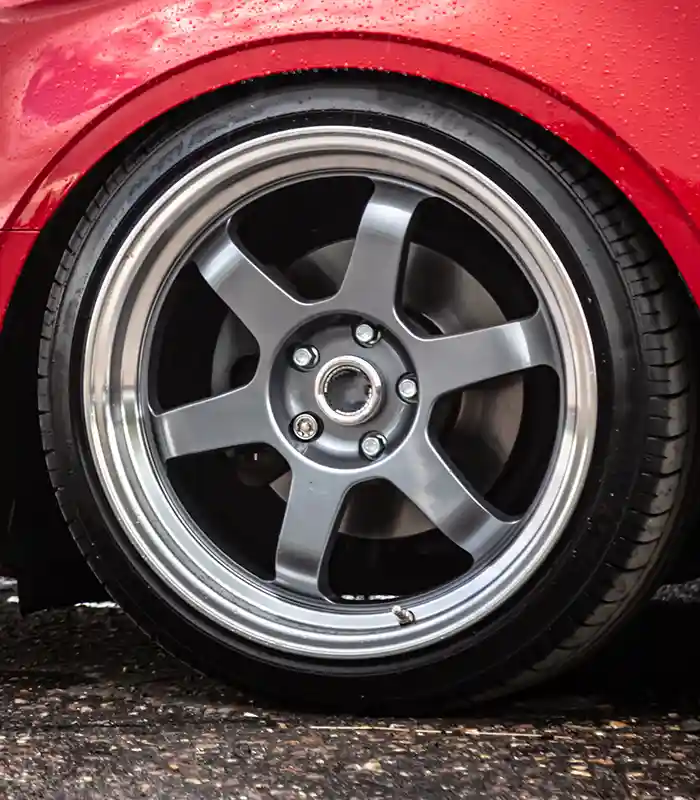
Offset (ET) is built into the wheel and determines where the mounting pad sits relative to the wheel’s centerline. Changing offset alters backspacing, track width, and how close the inner barrel is to your upper control arm, tie rod, and brake caliper. Spacers are add-on components that move an existing wheel outward to create clearance or achieve a desired stance without replacing the wheel itself.
Neither approach is universally better. The right choice depends on your vehicle’s brake package, tire size, suspension geometry, desired poke, fender laws, and how you use the truck or SUV on-road and off-road.
At Automotive Expressions, we help drivers in Flowery Branch, GA, and throughout North Georgia evaluate spacer vs offset as part of a complete wheel-and-tire plan. That means confirming bolt pattern, center bore, hub-centric fitment, wheel width, backspacing, brake clearance, wheel load rating, tire compatibility, suspension clearance, and intended use before making changes.
Spacer vs Offset at a Glance
Category |
Wheel Offset (ET) |
Wheel Spacers |
|
Overall focus |
Built-in position of the wheel; sets backspacing and inner/outer clearance |
Add-on thickness to push wheels outward for clearance or stance |
|
Typical appearance |
Clean solution; no visible hardware change when chosen correctly |
Visible widening of track and poke; sometimes a more aggressive look |
|
Common vehicles |
Any vehicle where new wheels are being selected for ideal fit |
Vehicles needing small outward movement to clear UCA, tie-rod, or calipers |
|
Wheel sizes |
All sizes; offset varies by width and application |
Spacer thicknesses commonly 3–25 mm (slip-on) and 15–50 mm (bolt-on) |
|
Construction options |
Not applicable; offset is part of wheel design |
Hub-centric vs lug-centric; billet or forged aluminum with high-grade hardware |
|
Off-road specialty |
Use offset to maintain scrub radius and bearing load within safe ranges |
Use quality hub-centric spacers for brake/UCA clearance when wheels can’t be replaced |
|
Best starting point |
Select wheels with the correct offset first; preserves geometry and load paths |
Apply spacers only when minor corrections or part-clearance are required |
In short, offset is the foundational fitment choice and should be optimized when buying wheels. Spacers are a tool for specific clearance fixes or subtle stance adjustments when replacing wheels isn’t practical.
What Offset Really Does
Offset (often labeled ET) is the millimeter distance between a wheel’s mounting surface and its centerline. Positive offset moves the wheel inward toward the suspension; negative offset shifts it outward, increasing poke. Because offset and width define backspacing, small changes can dramatically affect inner-barrel clearance to the upper control arm, tie rod ends, and brake calipers.
Choose offset wisely if you want:
- Improved clearance inside the wheel well without resorting to spacers
- A stance that aligns with fender coverage laws and reduces mud spray
- Predictable steering feel with controlled scrub radius
- Proper bearing load distribution for longevity
- Room for larger brake kits without interference
- Correct fit on stock-height, leveled, or lifted vehicles
- Balanced performance on half-ton, heavy-duty, and SUV applications
Dialing in offset is especially important on popular platforms like F-150, Silverado, Sierra, Ram, Tundra, Jeeps, and Broncos, where even a 6–12 mm change can be the difference between rubbing and perfect clearance.
Spacer Types and Safe Use
Spacers come in two primary styles, and correct selection is crucial for safety and ride quality.
- Hub-centric spacers fit tightly over the vehicle’s hub and include a matching hub lip for the wheel. This centers the wheel on the hub, minimizing vibration and reducing stress on studs.
- Lug-centric spacers rely solely on lug nuts to center the wheel. These can work in limited scenarios but are more sensitive to installation accuracy and are less ideal for heavy-duty or off-road use.
- Bolt-on vs slip-on: Bolt-on spacers attach to the hub with their own hardware and provide new studs for the wheel; slip-on spacers slide over existing studs and require sufficient remaining thread engagement.
- Hardware and torque: Use quality 10.9/12.9 bolts or OEM-grade studs and correct conical-seat lug nuts. Torque in stages using a calibrated torque wrench, then re-torque after 50–100 miles.
Spacers can create caliper, UCA, and tie-rod clearance and fine-tune stance. However, excessive spacing can push scrub radius too far, increase bearing load, cause tramlining, or lead to fender poke and debris spray. The goal is the thinnest effective spacer with proper hub-centric support and proven hardware.
Offset, Spacers, and Vehicle Dynamics
Moving the wheel outward—whether by lower offset or a spacer—widens track width and changes scrub radius. Moderate increases can enhance stability, but going too far can degrade steering return-to-center, add kickback on rough trails, and accelerate wheel bearing wear. When fitting larger tires, we often combine a modest offset change with minimal spacer use to maintain geometry while clearing components.
Our team at Automotive Expressions evaluates backspacing, inner/outer clearance, stud engagement, brake package size, and local inspection rules to determine when to adjust offset versus add a spacer. We aim for a clean, legal fit that avoids rubbing, poke beyond the fender, and premature component wear.
The right plan prevents common pitfalls: rubbing at full lock, contact at bump, mud spray down the sides, and failed inspections due to excessive tire protrusion. If you’re also considering wheel diameter or tire size changes, we can advise how offset and spacers interact with choices like 20 vs 18 wheels or 35 vs 37 tires without compromising safety.
Spacer vs Offset: Choosing the Right Track Width Solution
When you’re dialing in stance or solving clearance problems, you’ll usually reach for one of two tools: wheel offset or wheel spacers. Offset is built into the wheel and determines where the mounting pad sits relative to the wheel’s centerline, moving the wheel inward or outward. Spacers are add-on components that push the wheel outward by a fixed thickness. At Automotive Expressions, we help drivers understand when to select a wheel with the correct offset and when a spacer is the safer, cleaner fix for brake, upper control arm, tie-rod, or shock clearance.
Consider adjusting offset or adding spacers if you want:
- Additional clearance for calipers, UCA, or tie-rods without changing steering geometry more than necessary
- Targeted track-width changes to improve stability or achieve a specific stance
- Improved inner-fender and suspension clearance when stepping up tire width
- Reduced rubbing on sway-bar or frame at full lock
- Fine-tuned poke to meet local fender-coverage rules
- Hub-centric solutions that minimize vibration and protect bearings
- Safe stud engagement and proper torque values for reliable hardware retention
- A practical balance between appearance, handling, and tire longevity
Offset and spacers both change where the tire sits under the vehicle, but they’re not interchangeable. The right approach depends on your goal: clearing interference, correcting backspacing, matching a brake upgrade, or achieving a flush look without excess poke. Automotive Expressions can measure your existing setup, calculate effective offset, and recommend an OE-level fitment that respects steering feel, bearing load, and fender laws.
Understanding Offset, Backspacing, and Effective Track
Offset (often labeled ET) is expressed in millimeters. Positive offset moves the wheel inward toward the suspension; negative offset pushes it outward. Changing offset alters backspacing, which is the distance from the wheel mounting pad to the inner wheel lip. Even small offset changes meaningfully affect scrub radius, bearing load, and how the steering self-centers.
Offset is built into the wheel and is generally the cleanest way to set track width because it preserves full stud engagement with standard lugs and keeps hardware simple for street use. However, offset options are limited to what each wheel model offers, which is why spacers can be helpful for fine-tuning after a brake kit or tire-width change.
Any stance change impacts vehicle dynamics. More outward movement increases leverage on hubs and bearings; more inward movement may cause rubbing on suspension components. Aim for the least change that solves your clearance or stance need for predictable handling and even tire wear.
Spacers: Hub-Centric vs. Lug-Centric
Not all spacers are the same.
Feature |
No Spacer (Offset Only) |
Hub-Centric Spacer |
Lug-Centric Spacer |
|
Wheel centering |
Wheel centers on the hub pilot; OE-style location |
Spacer matches hub bore and replicates a hub lip for true centering |
Centering relies on lug seats; higher risk of vibration if not installed perfectly |
|
Use case |
Best for permanent fitment and minimal hardware complexity |
Ideal for precise track-width tweaks and brake/UCA clearance |
Temporary or budget solutions where hub-centric options are unavailable |
|
Hardware and safety |
Standard studs/lugs; follow OE torque spec |
Requires correct-length studs/bolts and torque; re-torque after heat cycles |
Extra diligence needed to ensure concentricity and proper stud engagement |
|
Best practice |
Select wheel offset that meets your clearance and stance goals |
Choose high-quality, hub-centric, properly rated spacers for street-driven vehicles |
Use cautiously; confirm fit, engagement, and local inspection rules |
Automotive Expressions recommends hub-centric spacers for most on-road builds because they maintain proper load path through the hub, reduce vibration, and support consistent torque retention.
Offset Basics: How Wheel Position Moves In or Out
Offset determines where the wheel sits relative to the hub. Increasing positive offset pulls the wheel inward; reducing positive offset (or going negative) pushes it outward. That movement changes backspacing, track width, and where the tire contacts fenders and suspension. For example, moving from +35 mm to +15 mm effectively adds 20 mm of outward stance per side without spacers—often enough to clear an upper control arm with a wider tire.
Spacers accomplish a similar outward shift by adding thickness between the hub and wheel. A 15 mm spacer on a +35 mm wheel creates an effective +20 mm offset. The key is calculating effective offset before you buy wheels or tires so you avoid poke, rubbing at full compression, or interference at full steering lock.
Neither approach is universally better.
Choose offset changes when you want a clean, permanent solution with minimal hardware. Choose spacers when you need a small, precise push outward to clear calipers, tie-rods, or control arms, or to fine-tune stance after a brake upgrade. Whichever route you take, confirm brake caliper and barrel clearance first—some big-brake packages demand specific backspacing to clear the caliper bridge.
Always verify stud engagement and torque specs if spacers are used. As a rule of thumb, aim for a minimum of 6.5 to 8 full turns on conical-seat lug nuts (or manufacturer-specified thread engagement for bolts). Re-torque after 50–100 miles and after severe heat cycles. If current studs are too short, upgrade to extended studs or use high-quality bolt-on spacers with their own pressed-in studs.
Handling, Loads, and Safety Considerations
Moving the wheel outward increases scrub radius and the lever arm on bearings and ball joints. A small change can improve stability and road feel; too much can introduce tramlining, heavier steering, and accelerated bearing wear. Keep changes moderate and symmetric, and ensure alignment is set correctly to minimize tire wear and wandering.
Before finalizing fitment, review these specifics for your setup:
- Offset/backspacing targets to clear UCA, tie-rod ends, and brake calipers
- Hub-centric vs lug-centric spacer design and center-bore compatibility
- Wheel load rating and spacer material/torque hardware quality
- Stud length, thread pitch, and required engagement with your lug-seat style
- Fender and liner clearance at bump and full lock to avoid rubbing and mud spray
- Local inspection rules and fender coverage laws regarding poke
- Alignment and steering feel after changes to scrub radius
- Intended tire size and approved wheel-width range to match backspacing
High-quality spacers are typically CNC-machined from 6061-T6 or 7075-T6 aluminum with precise hub bores, and should be installed on clean, flat mounting faces. Avoid stacking spacers. For mixed-use builds, a modest effective offset change combined with the right tire size often delivers better results than extreme outward poke. If you’re comparing other mods like 20 vs 18 wheels or 35 vs 37 tires, we can factor those into the fitment plan without compromising safety.
Spacer vs Offset by Vehicle Type
F-150, Silverado, Sierra, and Ram Trucks
Full-size trucks often need extra clearance for upper control arms, tie-rods, or brake calipers when moving to wider tires. Adjusting wheel offset is the cleanest way to shift the wheel inboard or outboard while maintaining proper hub engagement and bearing load. A modest negative offset can widen track width and improve stance, but too much can increase scrub radius and steering effort.
Wheel spacers can solve tight clearance on factory wheels or preserve OEM backspacing while gaining room for suspension or calipers. Quality, hub-centric spacers are critical on heavy trucks; they center the wheel on the hub, reduce vibration, and protect studs. Always confirm stud engagement or use stud-conversion/adapters where appropriate.
For towing and hauling, prioritize load ratings, verify torque specs, and re-torque after 50–100 miles. Whether using offset changes or spacers, keep an eye on fender coverage, mud spray, and local regulations regarding tire poke.
Jeep Wrangler and Gladiator
Jeeps frequently run wider all-terrains or mud-terrains, so offset and backspacing are key to clearing sway-bar links, control arms, and steering knuckles. Selecting a wheel with the correct offset typically offers the most reliable solution for articulation and full-lock steering without rubbing.
However, if you want to keep stock wheels, hub-centric spacers can push the wheel outward to clear larger tires and brake upgrades. Choose spacer thickness intentionally—small changes (e.g., 10–20 mm) can resolve rub without excessive poke that triggers fender-law issues.
Test at full steering lock and through suspension travel. Lift height, tire width, wheel width, and offset or spacer thickness work together to determine whether the tires contact inner fenders, pinch seams, or flare edges on the trail.
Tacoma, Ranger, Bronco, and 4Runner
Midsize platforms are sensitive to offset because relatively small changes can cause contact with fender liners, body mounts, or upper control arms. When changing wheels, target an offset that moves the tire just enough for clearance while keeping scrub radius and bearing load in check.
If retaining OEM wheels, spacers can add the needed clearance for UCA or tie-rod ends. Choose hub-centric designs, verify lug-seat compatibility, and ensure sufficient thread engagement. Remember: a suspension lift increases vertical room but doesn’t fix lateral clearance created by offset or spacer changes.
Street Trucks and Premium SUVs
For street-oriented builds, dialing in offset typically offers the cleanest fit and best ride quality, minimizing vibration risk and maintaining factory-like hub support. Aim for an offset that fills the fender without exceeding local poke limits or creating excessive road spray.
Spacers remain useful for fine-tuning stance on OEM wheels or when brake clearance is tight behind large calipers. Use high-quality hardware, follow torque procedures, and schedule periodic inspections to maintain safety and smooth, quiet performance.
Fitment Principles: Offset First, Spacers When Needed
Offset and spacers both change where a wheel sits, but they do so differently. Offset (ET) is built into the wheel and shifts the mounting pad to move the tire inward or outward, affecting scrub radius, bearing load, and steering feel. Spacers are separate components that push the wheel outward to gain clearance or stance—ideal when keeping OEM wheels or solving caliper/UCA interference.
Before deciding, confirm:
- Vehicle year, make, model, trim, drivetrain, and axle configuration
- Exact bolt pattern
- Center-bore requirements and hub-centric ring needs
- Lug-nut thread, seat style, and compatible hardware
- Wheel diameter and width
- Offset and backspacing
- Brake-caliper clearance
- Tire manufacturer-approved wheel-width range
- Tire load rating, speed rating, and weight
- Wheel load rating
- Fender, bumper, liner, suspension, and steering clearance
- Lift, leveling, lowering, or coilover setup
- Full-lock steering and suspension-compression clearance
- Towing, hauling, cargo, daily-driving, or trail-use needs
A setup that seems fine in the driveway may rub at full lock, under compression, or with cargo. Professional assessment ensures proper stud engagement, correct torque spec, safe spacer thickness, and an offset that preserves drivability while avoiding trimming, vibration, or premature component wear.
Spacer or Offset: What’s Right for You?
Choose an offset change when you’re buying new wheels and want the cleanest solution for clearance, minimal vibration risk, and predictable handling. A well-chosen ET maintains hub support, manages scrub radius, and reduces the chance of fender-law or mud-sling issues.
Choose quality, hub-centric spacers when you must keep existing wheels, need just a few millimeters of outward movement for calipers or UCAs, or want to fine-tune stance. Verify lug-seat type, ensure adequate thread engagement, and re-torque after initial miles.
In mixed-use builds—daily driving with occasional trails or towing—either method can work. The correct choice depends on your tire size, wheel width, brake package, and how much clearance you need. Briefly, larger-diameter wheels (see our 20 vs 18 Wheels overview) and bigger tires (see 35 vs 37 Tires) change these calculations, but the spacer vs offset fundamentals remain the same.
Get Spacer vs Offset Guidance in North Georgia
Dialing in track width and clearance safely requires more than guessing a number. Automotive Expressions evaluates offset, backspacing, stud length, spacer quality, hub-centric fitment, torque specs, and fender laws to deliver a setup that looks right and drives correctly.
Automotive Expressions is a local, family-owned custom wheel, tire, suspension, and truck accessory shop in Flowery Branch, GA. We serve drivers throughout North Georgia and the northern Atlanta area, including Gainesville, Buford, Suwanee, Sugar Hill, Cumming, Duluth, Alpharetta, Johns Creek, Lawrenceville, and surrounding communities. Automotive Expressions provides custom wheel and tire packages, lift kits, leveling kits, suspension upgrades, and professional installation.
Contact Automotive Expressions today to compare spacer vs offset solutions, review tire sizes, confirm wheel offset and backspacing, verify brake clearance and load ratings, discuss hub-centric vs lug-centric spacers, and build a safe, smooth package for your truck, Jeep, SUV, Bronco, Tacoma, or off-road vehicle.