How Suspension Upgrades Affect Clearance
Learn how suspension upgrades affect ground, tire, fender, and suspension clearance. Find out how lifts, shocks, control arms, and tires impact fitment.
How Suspension Upgrades Affect Clearance | Truck Fitment Guide
Suspension upgrades can dramatically change the appearance, performance, and capabilities of a truck or SUV. Whether you’re installing a lift kit, upgrading shocks, replacing control arms, or adding larger tires, suspension modifications can affect several types of clearance.
Understanding how suspension upgrades affect clearance is essential when building a lifted truck or planning a new wheel and tire setup. Increasing ride height may create more ground clearance, but it doesn’t automatically solve every fitment problem. Tire rubbing, suspension interference, and fender clearance can still be concerns depending on your vehicle and the components you choose.
At Automotive Expressions, we understand that suspension, wheels, tires, and fitment all work together. Choosing compatible components can help you achieve the appearance and performance you want without creating unnecessary clearance issues.
What Is Clearance?
When discussing suspension upgrades, clearance can refer to several different areas of your vehicle.
Ground Clearance
Ground clearance is the distance between the lowest components underneath your vehicle and the ground.
Increasing ground clearance can help your truck navigate:
- Rocks
- Ruts
- Mud
- Uneven terrain
- Steep approaches
- Obstacles
A suspension lift can increase the distance between the ground and components such as the frame, axles, and suspension.
Fender Clearance
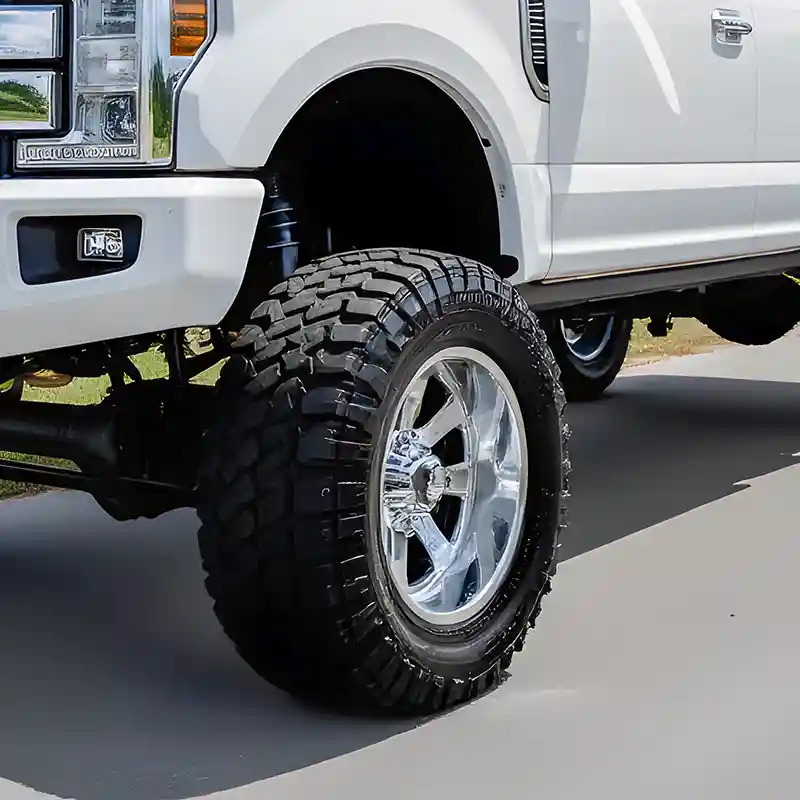
Fender clearance refers to the available space between the tire and the vehicle’s fender or wheel well.
This is especially important when installing larger tires.
A lift may create more vertical space, but the tire can still contact the fender liner or body during turning or suspension compression.
Suspension Clearance
Suspension clearance refers to the space between the tire and suspension components such as:
- Control arms
- Shocks
- Struts
- Sway bars
- Steering components
Wheel width and offset can significantly affect this type of clearance.
Frame and Body Clearance
Larger tires may come closer to the frame, body mounts, or other components.
Depending on the vehicle and wheel and tire combination, additional modifications may be necessary to prevent contact.
How Does a Lift Kit Increase Clearance?
A suspension lift raises the vehicle’s suspension and body relative to the axles and ground.
This can provide additional clearance underneath the vehicle and create more room for larger tires.
However, the amount of additional clearance depends on the type of lift and where the clearance is needed.
For example, a lift may increase vertical clearance between the tire and fender, but it doesn’t necessarily increase clearance between the tire and control arm.
That’s why choosing the correct wheel offset and tire width is just as important as selecting the right lift height.
Does a Lift Kit Increase Ground Clearance?
A suspension lift can increase ground clearance in some areas, but the results depend on the vehicle and lift design.
Increasing suspension height may raise the frame and body, while components such as the axle housing and differential may remain at a similar height relative to the ground.
Installing larger tires can increase clearance beneath the axle and differential because the entire tire is larger.
For off-road applications, the combination of increased ride height and appropriately sized tires can improve the vehicle’s ability to clear obstacles.
How Larger Tires Affect Clearance
Larger tires are one of the most common reasons truck owners upgrade their suspension.
A larger tire can provide:
- Increased ground clearance
- More traction
- Improved off-road capability
- A more aggressive appearance
However, larger tires also require more space.
A tire that is taller can contact the fender during suspension compression. A wider tire may rub the inner fender, control arm, or other suspension components.
The amount of clearance required depends on:
- Tire diameter
- Tire width
- Wheel width
- Wheel offset
- Backspacing
- Lift height
- Suspension travel
- Steering angle
How Wheel Offset Affects Clearance
Wheel offset determines where the wheel sits in relation to the vehicle’s hub mounting surface.
Changing offset can move the tire:
- Closer to the suspension
- Farther away from the suspension
- Closer to the fender
- Farther toward the outside of the vehicle
A wheel with more negative offset generally pushes the wheel and tire farther outward, which can increase inner suspension clearance but may increase the risk of fender rubbing.
A wheel with more positive offset sits farther inward, which may improve fender clearance but create more potential for contact with suspension components.
The right offset depends on the vehicle, tire size, suspension setup, and desired stance.
How Backspacing Affects Clearance
Backspacing is another important fitment measurement.
It describes the distance from the wheel’s mounting surface to the inner edge of the wheel.
Backspacing affects how close the wheel and tire sit to suspension components and the inner wheel well.
When upgrading suspension and installing larger tires, the right combination of wheel offset and backspacing can help create adequate clearance.
Can Suspension Upgrades Prevent Tire Rubbing?
Suspension upgrades can help reduce certain types of tire rubbing, but they don’t guarantee that rubbing will be eliminated.
If a tire is rubbing because it is too tall for the available vertical space, a lift may provide additional room.
However, rubbing can also occur because of:
- Excessive tire width
- Incorrect wheel offset
- Incorrect backspacing
- Suspension compression
- Steering angle
- Fender design
- Wheel well shape
In some cases, additional modifications may be necessary.
These can include:
- Fender liner adjustments
- Minor trimming
- Bump stop adjustments
- Control arm changes
- Different wheels
- Smaller tires
The goal should be to select components that provide appropriate clearance without relying on unnecessary modifications.
How Control Arms Affect Clearance
Upgraded control arms are often used with suspension lifts to improve suspension geometry.
Depending on the design, aftermarket control arms may provide additional clearance or create new fitment considerations.
The relationship between the control arm and tire is particularly important when installing wider tires.
If the tire is too close to the control arm, changing wheel offset may be necessary.
This is why suspension and wheel fitment should be considered together.
How Shocks Affect Clearance
Shocks and struts can influence available suspension clearance.
When upgrading shocks for a lifted vehicle, the shock must be appropriate for the lift height and suspension travel.
An improperly matched shock can potentially limit suspension travel or create clearance issues.
Quality components designed for your specific vehicle and lift height can help maintain proper suspension operation.
How Suspension Travel Affects Clearance
Suspension travel refers to the amount the suspension can move through its range of motion.
When the suspension compresses, the tire moves closer to the fender and other components.
A truck may have plenty of clearance while parked but still experience tire rubbing when the suspension compresses during:
- Off-road driving
- Cornering
- Hitting bumps
- Driving over uneven terrain
- Articulating the suspension
This is why clearance should be evaluated throughout the suspension’s range of motion rather than only when the vehicle is sitting still.
How Suspension Upgrades Affect Steering Clearance
Lifting a truck can change steering and suspension geometry.
Depending on the vehicle and lift, the relationship between the tire and steering components may change.
When turning the steering wheel, the tire moves through an arc that can bring it closer to:
- Fender liners
- Control arms
- Sway bars
- Steering components
- Frame components
A wheel and tire combination that clears when driving straight may rub at full steering lock.
Always consider turning clearance when selecting larger tires.
Does a Leveling Kit Increase Clearance?
A leveling kit can increase clearance at one end of the vehicle by changing its ride height.
For example, a front leveling kit may create additional vertical space in the front wheel wells, potentially allowing for a larger tire.
However, a leveling kit doesn’t automatically provide clearance everywhere.
Tire width, wheel offset, and suspension travel still need to be considered.
How Suspension Upgrades Affect Off-Road Clearance
For off-road trucks, clearance is especially important.
Suspension upgrades can help increase:
- Ground clearance
- Approach clearance
- Departure clearance
- Breakover clearance
- Tire clearance
Larger tires can also help the vehicle roll over obstacles more easily.
However, simply adding more lift isn’t always the best solution.
A properly matched suspension system with the right wheel and tire combination can provide better overall performance than a vehicle with excessive lift and poorly matched components.
What Are the Signs of a Clearance Problem?
If your suspension or wheel and tire setup doesn’t have enough clearance, you may notice:
- Tire rubbing
- Scraping noises
- Visible marks on the tire
- Damage to fender liners
- Contact with suspension components
- Rubbing during turns
- Rubbing when hitting bumps
- Uneven tire wear
If you hear rubbing, inspect the vehicle to determine exactly where the contact is occurring.
Continuing to drive with significant tire rubbing can potentially damage the tire or vehicle components.
How Do I Know If My New Tires Will Fit?
Before purchasing larger tires, evaluate the complete fitment.
Consider:
- Tire diameter
- Tire width
- Wheel diameter
- Wheel width
- Wheel offset
- Backspacing
- Lift height
- Suspension design
- Steering clearance
- Fender clearance
Vehicle-specific fitment information is helpful, but every modified vehicle can be different.
If the vehicle has aftermarket suspension, wheels, or other modifications, the complete combination should be evaluated rather than relying only on stock fitment specifications.
Do I Need a Lift to Run Larger Tires?
Not always.
Some trucks can accommodate larger tires with a leveling kit or minor modifications, while others may require a suspension lift.
The amount of lift needed depends on the tire size and the vehicle.
A lift kit may provide additional vertical clearance, but wheel offset and tire width still need to be considered.
In some cases, the right wheel and tire combination can make a bigger difference than simply adding more lift.
How to Choose the Right Suspension Upgrade
When choosing a suspension upgrade, consider how you use your vehicle.
Daily Driving
For a daily driver, focus on maintaining:
- Comfortable ride quality
- Predictable handling
- Proper alignment
- Adequate tire clearance
Off-Road Driving
Off-road builds may prioritize:
- Ground clearance
- Suspension travel
- Articulation
- Larger tires
- Durability
Towing and Hauling
Towing and hauling applications require careful attention to:
- Load capacity
- Suspension components
- Tire load ratings
- Wheel load ratings
- Vehicle payload limits
The best suspension upgrade is the one that supports your goals without creating unnecessary compromises.
How to Maintain Proper Clearance After a Suspension Upgrade
After installing a suspension upgrade, regularly inspect the vehicle for clearance issues.
Check for contact:
- At full steering lock
- During suspension compression
- After off-road driving
- Around suspension components
- Inside the wheel wells
If you install new wheels or tires, inspect the fitment before driving extensively.
It’s also important to have your alignment checked after significant suspension modifications.
Get the Right Suspension, Wheel, and Tire Fitment
Suspension upgrades can improve ground clearance, tire clearance, and off-road capability, but the results depend on how the entire vehicle is configured.
The right lift height, wheel offset, backspacing, tire size, and suspension components should work together to provide adequate clearance throughout the vehicle’s range of motion.
At Automotive Expressions, we understand that building a lifted truck requires more than choosing a lift kit and the biggest tires that will fit. Every component affects the overall fitment and performance of your vehicle.
Whether you’re upgrading a daily driver, building an off-road truck, or creating a custom lifted vehicle, Automotive Expressions can help you consider the complete wheel, tire, and suspension setup.
Contact Automotive Expressions to learn more about suspension upgrades, wheel and tire fitment, and creating the right setup for your truck or SUV.
Frequently Asked Questions About Suspension Upgrades and Clearance
How do suspension upgrades affect clearance?
Suspension upgrades can increase ground clearance and create additional room for larger tires. However, they can also change suspension geometry and affect clearance between the tires, fenders, control arms, and other components.
Does a lift kit increase ground clearance?
A suspension lift can increase clearance between the ground and certain components of the vehicle. Larger tires can also increase clearance beneath the axles and differential.
Do I need a lift kit to install larger tires?
Not always. Some vehicles can accommodate larger tires with a leveling kit or minor modifications. The appropriate lift height depends on the vehicle, tire size, wheel offset, and intended use.
Can a lift kit prevent tire rubbing?
A lift kit can help reduce rubbing caused by insufficient vertical clearance, but it may not solve rubbing caused by tire width, wheel offset, backspacing, or steering angles.
How does wheel offset affect clearance?
Wheel offset determines how far the wheel sits inward or outward. Changing offset can increase clearance between the tire and suspension components but may also increase the potential for fender rubbing.
What is the difference between ground clearance and tire clearance?
Ground clearance refers to the space between the bottom of the vehicle and the ground. Tire clearance refers to the available space around the tire, including the fender, suspension, steering, and other components.
Why do my tires rub when I turn?
Tires may rub during turns because the steering angle moves the tire closer to the fender, fender liner, control arm, or other components. Wheel offset, tire width, and backspacing can all affect turning clearance.
Can larger tires cause suspension clearance problems?
Yes. Larger or wider tires can come into contact with control arms, shocks, struts, sway bars, or other suspension components. Proper wheel offset and backspacing are important for maintaining clearance.
How do I know if my suspension upgrade has enough clearance?
Clearance should be checked while the vehicle is sitting at ride height and throughout suspension movement. The tires should also be checked at full steering lock to identify potential rubbing.
Can Automotive Expressions help me choose the right wheels and tires for a suspension upgrade?
Yes. Automotive Expressions can help you consider tire size, wheel diameter, wheel width, offset, backspacing, and overall fitment when selecting wheels and tires for a vehicle with suspension upgrades.