What Size Tires Can I Run With a Lift Kit
Find out what size tires you can run with a lift kit. Learn how lift height, tire width, wheel offset, backspacing, and rubbing affect fitment.
What Size Tires Can I Run With a Lift Kit?
Installing a lift kit is a popular way to give your truck or SUV a more aggressive appearance, increase ground clearance, and create room for larger tires. However, choosing the right tire size isn’t as simple as determining how many inches your vehicle has been lifted.
The maximum tire size you can run depends on several factors, including your vehicle’s make and model, lift height, suspension design, tire width, wheel diameter, wheel offset, backspacing, and available clearance.
A tire that fits one lifted truck may rub on another, even when both vehicles have the same lift height. Understanding these fitment factors can help you choose a wheel and tire combination that looks great and performs properly.
At Automotive Expressions, we help drivers explore wheel and tire options based on their vehicles, lift kits, and driving goals.
How Does a Lift Kit Affect Tire Size?
A lift kit can increase the space available between your vehicle and the ground, but it doesn’t necessarily create unlimited room inside the wheel well.
Depending on the type of lift, you may gain clearance for a taller tire. However, the tire still needs enough room to clear the fender, suspension, steering components, and inner wheel well.
The amount of lift is only one part of the equation.
How Much Lift Do I Need for Larger Tires?
There is no universal relationship between lift height and tire size. The appropriate lift depends on your vehicle and the specific tire you want to install.
As a general starting point:
- Leveling kits: May allow modestly larger tires on some vehicles.
- 2-inch to 3-inch lifts: May accommodate a noticeable increase in tire size, depending on the vehicle.
- 4-inch to 6-inch lifts: Often provide additional clearance for larger tires and more aggressive off-road setups.
- Higher lifts: May accommodate substantially larger tires but can require additional modifications and affect vehicle handling.
These are general guidelines, not guarantees. The same tire size may fit differently depending on the vehicle, wheel offset, tire width, and suspension setup.
What Is the Biggest Tire I Can Fit?
The largest tire you can fit depends on the complete vehicle setup.
Before choosing a tire, consider:
- Vehicle make, model, and year
- Lift height
- Type of lift kit
- Tire diameter
- Tire width
- Wheel diameter
- Wheel width
- Wheel offset
- Backspacing
- Suspension travel
- Fender clearance
- Steering clearance
A taller tire may clear the fender but rub when the steering wheel is turned. A wider tire may contact the suspension or inner wheel well.
For this reason, maximum tire size should always be evaluated based on the entire wheel and tire combination.
Tire Diameter vs. Tire Width
When discussing tire size, it’s important to consider both diameter and width.
A taller tire increases overall diameter and can provide additional ground clearance. However, it may also create clearance issues at the top of the wheel well.
A wider tire may improve traction and create a more aggressive stance but can increase the risk of rubbing against fenders and suspension components.
In some cases, a narrower, taller tire may fit better than a shorter, wider tire. The right combination depends on your vehicle and intended use.
How Wheel Offset Affects Tire Fitment
Wheel offset determines how far the wheel sits inward or outward from the vehicle’s hub.
Changing the offset can dramatically change how a larger tire fits.
A wheel with a more negative offset pushes the tire outward. This may provide additional clearance between the tire and suspension components but can increase the risk of contact with the fender.
A more positive offset moves the tire inward, which may improve outer fender clearance but create more potential for rubbing against suspension components.
Choosing the right offset is essential when installing larger tires on a lifted vehicle.
Don’t Forget About Backspacing
Backspacing is closely related to wheel offset and determines how far the wheel sits toward the inside of the vehicle.
Incorrect backspacing can cause a larger tire to sit too close to suspension components or other parts inside the wheel well.
When selecting wheels for larger tires, consider both offset and backspacing rather than focusing solely on wheel diameter.
Can I Use My Stock Wheels?
In many cases, you can use your stock wheels with a lift kit. However, your factory wheels may limit the size and width of tires you can install.
Stock wheels have a specific width, offset, and backspacing. These measurements determine where the tire sits and how much clearance is available.
If you want to install significantly larger or wider tires, aftermarket wheels may provide additional fitment options.
Before purchasing new tires, verify that your stock wheels are compatible with the desired tire size.
How to Avoid Tire Rubbing
Tire rubbing is one of the most common concerns when installing larger tires.
Rubbing may occur when:
- Turning the steering wheel
- Driving over bumps
- Compressing the suspension
- Off-roading
- Carrying heavy loads
To reduce the risk of rubbing, choose a tire and wheel combination that is properly matched to your vehicle.
Potential solutions may include:
- Choosing a narrower tire
- Selecting a different wheel offset
- Adjusting backspacing
- Modifying the fender liner
- Installing additional suspension components
- Increasing lift height
Any modification should be evaluated carefully to ensure it doesn’t create new handling or safety issues.
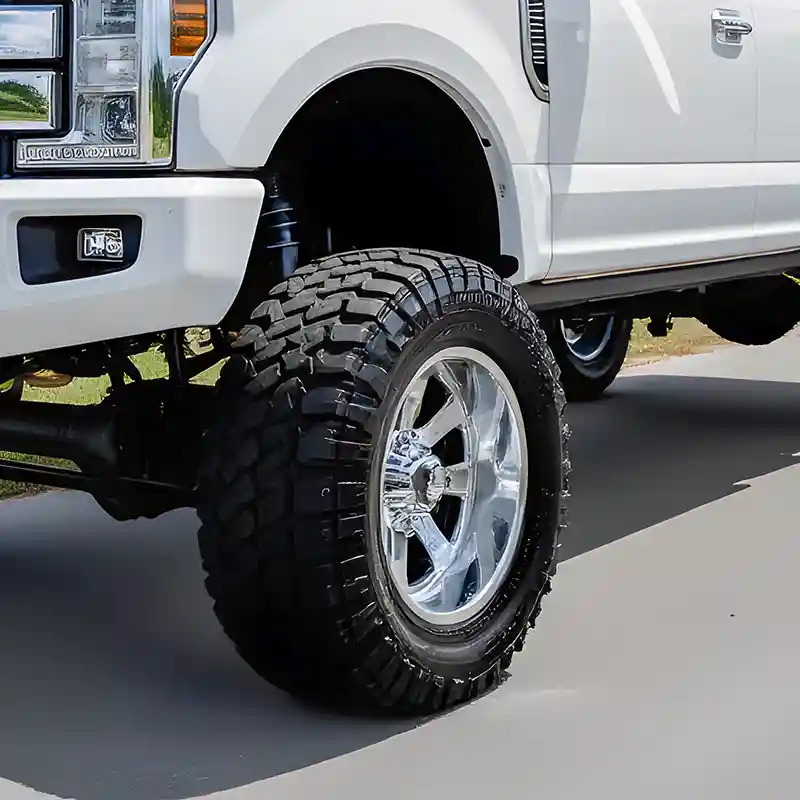
The right backspacing can help provide adequate clearance between the tire and suspension components.
How Tire Size Affects Vehicle Performance
Larger tires can provide benefits, but they can also change how your vehicle performs.
Potential benefits include:
- Increased ground clearance
- Improved obstacle clearance
- More aggressive appearance
- Potential off-road advantages
Potential tradeoffs include:
- Reduced acceleration
- Changes in braking performance
- Lower fuel economy
- Heavier steering
- Changes in ride quality
- Speedometer inaccuracies
- Additional drivetrain stress
Larger tires can also affect the vehicle’s gearing. If the overall tire diameter changes significantly, the engine and transmission may need to work differently to achieve the same performance.
Consider Your Intended Use
The ideal tire size depends heavily on how you use your vehicle.
A truck that spends most of its time commuting on highways may not need the largest tire possible. A vehicle used for serious off-road driving may benefit from additional ground clearance and larger tires.
Consider whether you primarily use your vehicle for:
- Daily driving
- Highway travel
- Towing
- Hauling
- Camping
- Overlanding
- Trail driving
- Rock crawling
Choosing the largest possible tire isn’t always the best choice. The ideal setup is one that provides the performance and appearance you want without creating unnecessary fitment or drivability problems.
What Size Tires Can I Run With a 2-Inch Lift?
A 2-inch lift may allow some vehicles to accommodate larger tires than the factory setup, but there isn’t a single tire size that works across all makes and models.
Tire width, wheel offset, and suspension design can significantly affect the final fitment.
Some vehicles may accommodate larger tires with minimal modifications, while others may require fender liner adjustments or other changes.
What Size Tires Can I Run With a 4-Inch Lift?
A 4-inch lift generally provides more clearance than a 2-inch lift and may allow for a more significant increase in tire size.
However, tire width and wheel offset remain important. A very wide tire may still rub even when there is sufficient vertical clearance.
Your specific vehicle and lift kit should be evaluated before selecting a tire size.
What Size Tires Can I Run With a 6-Inch Lift?
A 6-inch lift can provide substantial additional clearance and may accommodate significantly larger tires.
However, larger tires can place additional demands on the vehicle’s suspension, steering, brakes, and drivetrain.
A professional fitment assessment can help ensure that the complete setup is appropriate for your vehicle.
What Is the Best Tire Size for a Lifted Truck?
The best tire size isn’t necessarily the largest tire that fits.
A properly matched setup should balance:
- Tire diameter
- Tire width
- Wheel size
- Wheel offset
- Backspacing
- Load rating
- Suspension clearance
- Driving conditions
If you use your truck every day, you may prefer a tire size that provides a comfortable ride and predictable handling. If you primarily drive off-road, additional ground clearance and traction may be more important.
Get the Right Tire Size for Your Lifted Vehicle
Choosing the right tire size for a lifted truck or SUV requires more than matching tire diameter to lift height. Tire width, wheel offset, backspacing, suspension travel, and available clearance all play a role.
At Automotive Expressions, we can help you explore wheel and tire combinations based on your vehicle, lift kit, and driving goals. Whether you’re building an off-road truck, upgrading your daily driver, or creating a custom setup, we can help you consider your fitment options.
Contact Automotive Expressions to learn more about what size tires you can run with your lift kit and find the right wheel and tire combination for your vehicle.
Frequently Asked Questions About Lift Kit Tire Sizes
Can I put larger tires on my truck after installing a lift kit?
Often, yes. A lift kit can provide additional clearance for larger tires, but the exact size depends on the vehicle, lift height, tire width, wheel offset, and other fitment factors.
Does a bigger lift always mean I can install bigger tires?
Not necessarily. Lift height is only one factor. Wheel offset, backspacing, tire width, fender clearance, and suspension design can all affect the maximum tire size.
Will larger tires rub after installing a lift kit?
They can. Larger tires may rub during tight turns, suspension compression, or off-road articulation. Proper wheel and tire fitment can help minimize rubbing.
Can I use my stock wheels with larger tires?
Possibly. However, your stock wheels’ width, offset, and backspacing may limit your tire options. Aftermarket wheels may provide more flexibility for larger or wider tires.
Can Automotive Expressions help me determine what tire size will fit my lifted vehicle?
Yes. Automotive Expressions can help you evaluate your vehicle’s lift height, tire dimensions, wheel specifications, offset, backspacing, and other fitment considerations to help you find an appropriate wheel and tire setup.