Wheel Fitment Guide
Read about the best ways to match your wheels for your specific vehicle.
YourWheel Fitment Guide
Choosing aftermarket wheels is about much more than finding a style you like. While appearance is often what first catches your attention, proper wheel fitment determines whether those wheels will perform safely, clear your suspension and brakes, and deliver the look you’re trying to achieve.
Unfortunately, many people purchase wheels based only on diameter or appearance, only to discover they rub the suspension, stick too far outside the fenders or won’t fit over the brake calipers.
At Automotive Expressions, we’ve helped countless North Georgia drivers build custom wheel and tire packages for trucks, SUVs, performance cars and daily drivers. One thing we’ve learned is that the best builds begin with proper planning.
This guide explains the fundamentals of wheel fitment, why every measurement matters and how choosing the right combination of wheels, tires and suspension components can help you avoid expensive mistakes.
Whether you’re installing custom wheels on a lifted truck, lowering a performance car or simply upgrading your daily driver, understanding wheel fitment is the first step toward a successful build.
What Is Wheel Fitment?
Wheel fitment refers to how a wheel fits your specific vehicle—not just whether it bolts onto the hub.
A properly fitting wheel should:
- Mount securely to the vehicle
- Clear the brake calipers
- Avoid contact with suspension components
- Fit inside the fenders during steering and suspension movement
- Support the vehicle’s weight
- Work correctly with the selected tire
- Complement any suspension modifications
A wheel that technically bolts onto the vehicle may still be the wrong choice if it creates rubbing, vibration or handling problems.
That’s why professional wheel fitment considers multiple measurements rather than just wheel diameter.
The Measurements That Determine Wheel Fitment
Several measurements work together to determine whether a wheel is compatible with your vehicle.
Bolt Pattern
The bolt pattern determines how the wheel attaches to the hub.
It identifies:
- Number of lug holes
- Diameter of the bolt circle
A wheel with the wrong bolt pattern simply will not mount correctly.
Even vehicles from the same manufacturer may use different bolt patterns depending on model year, trim level or drivetrain.
Related Guide: Wheel Bolt Patterns Explained
Wheel Diameter
Diameter refers to the size of the wheel measured from bead seat to bead seat.
Common truck sizes include:
- 17-inch
- 18-inch
- 20-inch
- 22-inch
Larger wheels often provide a more aggressive appearance while allowing larger brake packages to fit.
However, increasing wheel diameter usually requires shorter tire sidewalls if the overall tire height remains similar.
That can affect:
- Ride comfort
- Steering response
- Road noise
- Wheel protection
- Tire replacement cost
Choosing the right diameter is about balancing appearance with how the vehicle will actually be driven.
Related Guide: How to Choose the Right Wheel Size
Wheel Width
Wheel width determines which tire sizes can safely be installed.
A wider wheel may:
- Improve stance
- Support wider tires
- Change sidewall shape
- Affect steering response
- Influence suspension clearance
Choosing a wheel that’s too wide or too narrow for the intended tire can negatively affect performance and tire wear.
Wheel width should always be considered together with offset and tire selection.
Related Guide: Wheel Width Guide
Wheel Offset
Offset describes the location of the wheel’s mounting surface relative to the centerline of the wheel.
Offset largely determines where the wheel sits inside the wheel well.
Changing offset can affect:
- Suspension clearance
- Fender clearance
- Tire rubbing
- Vehicle stance
- Steering feel
- Wheel bearing load
Many wheel fitment problems can be traced directly to selecting the wrong offset.
Related Guide: Wheel Offset Explained
Backspacing
Backspacing measures the distance from the mounting surface to the inside edge of the wheel.
While closely related to offset, backspacing provides another way to evaluate how much space exists between the wheel and suspension components.
Proper backspacing becomes especially important on:
- Lifted trucks
- Vehicles with upgraded suspension
- Larger brake packages
- Wider wheel setups
Related Guide: Wheel Backspacing Explained
Hub Bore
The hub bore is the center opening in the wheel.
This opening must fit properly over the vehicle’s hub.
Many aftermarket wheels use a larger universal center bore combined with hub-centric rings to achieve the proper fit.
Improper hub centering can contribute to unwanted vibration.
Related Guides:
- Hub Bore Explained
- Hub-Centric vs. Lug-Centric Wheels
Brake Clearance
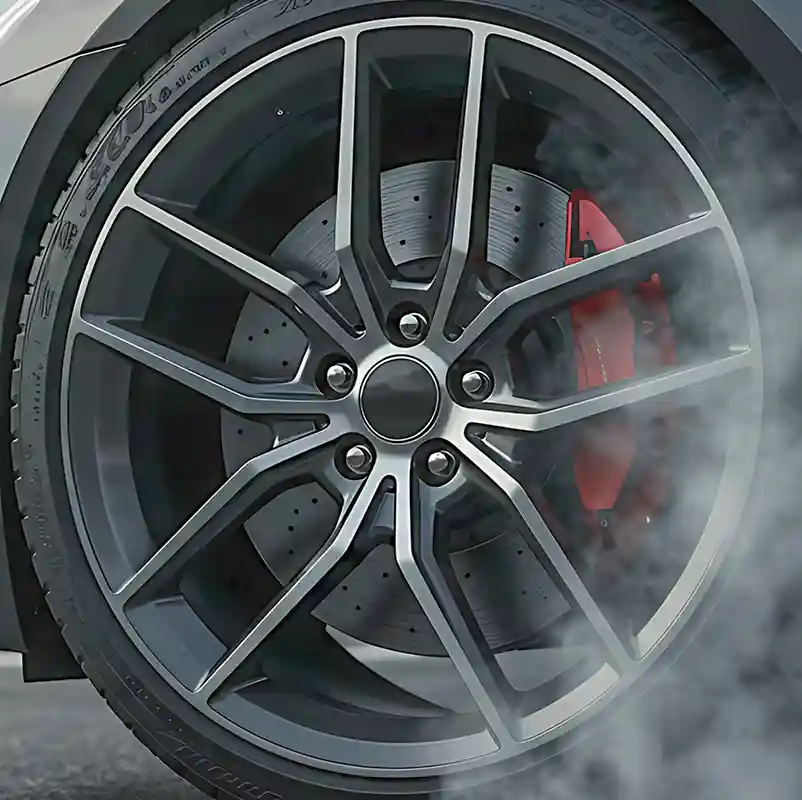
Brake clearance is one of the most overlooked parts of wheel fitment.
A wheel may have:
- the correct diameter,
- the correct bolt pattern,
- and the correct offset,
yet still fail to clear the brake calipers because of the wheel’s spoke design.
Brake clearance becomes even more important on:
- Performance vehicles
- Vehicles with factory brake upgrades
- Trucks with larger brake packages
- Vehicles with aftermarket brake systems
Related Guide: How to Determine Brake Clearance
Why Tire Selection Matters
Wheel fitment doesn’t end with the wheel.
The tire changes the entire package.
The selected tire affects:
- Overall diameter
- Sidewall height
- Clearance
- Ride quality
- Speedometer accuracy
- Steering
- Suspension travel
Two wheels with identical specifications can behave very differently when paired with different tire sizes.
That’s why Automotive Expressions plans wheels and tires together—not separately.
How Suspension Affects Wheel Fitment
Many customers ask:
“If I install a lift kit, can I fit larger wheels?”
The answer depends on several factors.
Lift kits, leveling kits and lowering kits all change the available clearance around the wheel and tire.
However, suspension modifications do not eliminate the need for proper wheel offset, backspacing and tire selection.
The best results come from planning all three systems together:
- suspension
- wheels
- tires
instead of selecting each independently.
Common Wheel Fitment Mistakes
The most common mistakes we see include:
Buying wheels based only on appearance
Just because a wheel looks good online doesn’t mean it will fit your vehicle properly.
Ignoring wheel offset
Offset has one of the biggest impacts on fitment.
Even small offset changes can dramatically affect clearance.
Choosing tires after the wheels
Wheel and tire selection should happen together.
Forgetting brake clearance
Many people assume larger wheels automatically clear larger brakes.
They don’t.
Assuming every lifted truck fits the same tires
Different trucks require different wheel specifications even with similar lift heights.
Copying another person’s setup
A build that works perfectly on one vehicle may not fit another because of:
- trim level
- suspension
- brake package
- wheel specifications
- tire choice
Why Professional Fitment Advice Matters
Online calculators and manufacturer fitment tools are helpful starting points.
However, they don’t always account for:
- aftermarket suspension
- desired stance
- real-world suspension travel
- brake upgrades
- tire brand differences
- wheel design differences
- future modifications
That’s where professional experience becomes valuable.
At Automotive Expressions, we don’t simply recommend products—we help customers build complete wheel, tire and suspension packages that work together.
By understanding your vehicle, how you use it and the look you’re trying to achieve, we can recommend combinations that balance appearance, performance and long-term drivability.
Frequently Asked Questions
Will any wheel with the correct bolt pattern fit my vehicle?
No. Bolt pattern is only one part of wheel fitment. Diameter, width, offset, backspacing, hub bore and brake clearance all need to be compatible with your vehicle.
Can I install larger wheels without changing my tires?
Usually not. Larger wheels are often paired with lower-profile tires to maintain a similar overall tire diameter. The correct combination depends on your vehicle and your goals.
Does wheel offset really matter?
Absolutely. Offset influences how far the wheel sits inward or outward, affecting suspension clearance, fender clearance and handling characteristics.
How do I know if aftermarket wheels will clear my brakes?
Brake clearance depends on more than wheel diameter. Wheel spoke design, barrel shape and offset can all affect caliper clearance. Automotive Expressions can help verify compatibility before you order.
Can I reuse my factory tires on aftermarket wheels?
Sometimes. Compatibility depends on wheel width, diameter and the manufacturer’s approved tire-width range.
Let Automotive Expressions Help You Build It Right
Choosing aftermarket wheels should be exciting—not frustrating.
Whether you’re upgrading your daily driver, building a lifted truck or creating a custom show vehicle, proper wheel fitment is the foundation of a successful build.
Automotive Expressions proudly helps drivers throughout Flowery Branch, Buford, Gainesville, Cumming, Suwanee, Sugar Hill and surrounding North Georgia communities choose wheels that fit correctly, perform reliably and achieve the look they’re after.
Contact Automotive Expressions today to discuss your vehicle, your goals and the wheel and tire package that’s right for you. Our team can help you avoid costly fitment mistakes and build a package designed to work together from day one.
Our Service Area
At Automotive Expressions, we proudly serve drivers throughout Georgia—including Alpharetta, Atlanta, Buford, Cumming, Duluth, Dahlonega, Gainesville, Johns Creek, Lawrenceville, Sugar Hill, Suwanee, and surrounding areas—with top-quality auto accessories that elevate both style and functionality. Whether you’re upgrading your vehicle’s interior, enhancing exterior appeal, or adding custom features, our expert team offers premium products and professional installation tailored to your needs.